
Coffee and Sustainability: A Guide for Australian Roasters

Australia’s leading sustainable coffee businesses combine regenerative farming, ethical sourcing, and eco-friendly packaging to reduce environmental impact while supporting producer livelihoods. For roasters and cafes, the clearest path forward runs through three local providers and one packaging partner built specifically for this market:
- Zentveld’s Coffee — pesticide-free cultivation, solar-powered roasting, regenerative agriculture in Byron Bay
- The Sustainable Coffee Company — specialty sustainable roasting and compostable pods since 2004
- FTA Coffee — ethical green coffee importing connecting Australian and New Zealand roasters directly with producers
- Coffeebagsdirect — APCO-partnered eco-friendly packaging including compostable and recyclable custom coffee bags
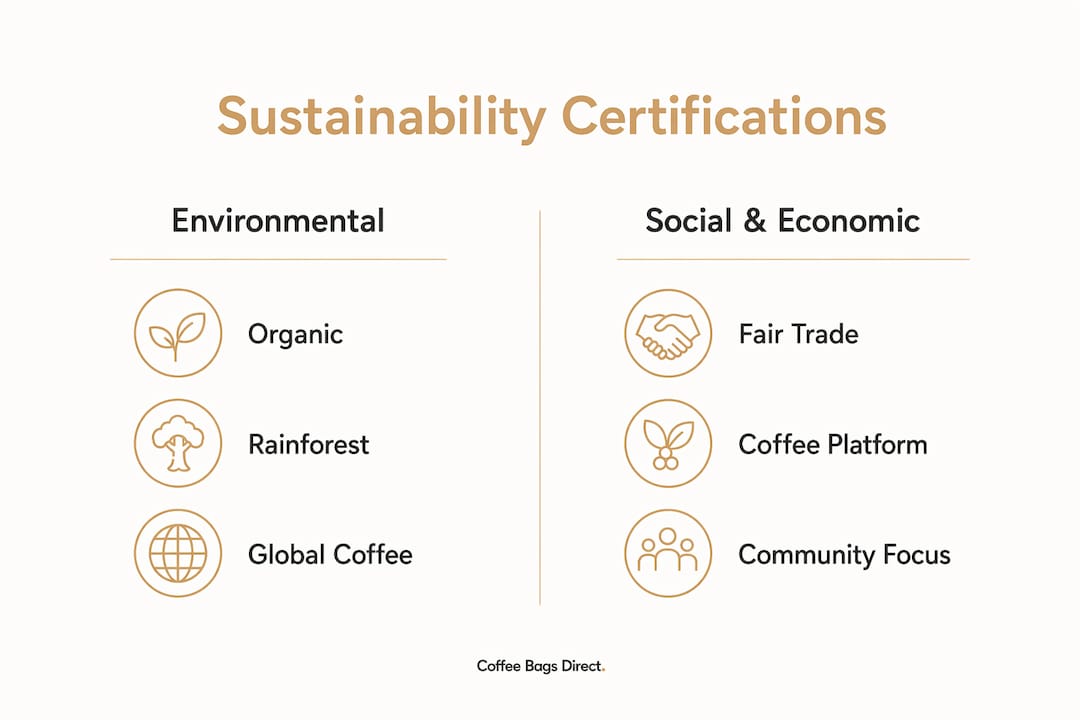
Certifications like Fair Trade, Rainforest Alliance, and the Global Coffee Platform’s Coffee Sustainability Reference Code give you a reliable baseline for evaluating claims. Packaging choices, from kraft to compostable film, complete the picture from roast to cup.
How do Australia’s sustainable coffee providers compare?
Each provider occupies a distinct role in the supply chain. A roaster sourcing green beans has different needs than a cafe wanting finished product or a business replacing plastic packaging.
| Provider | Specialization | Key Offerings | Sustainability Practice | Best For | Rating |
|---|---|---|---|---|---|
| Zentveld’s Coffee | Regenerative farming, single-estate Australian coffee | Espresso blends, single origin, farm tours; $17.50–$25+ per package | Solar-powered roasting, pesticide-free, regenerative agriculture | Eco-conscious cafes wanting Australian-grown specialty coffee | 4.9★ (218 reviews) |
| The Sustainable Coffee Company | Sustainable specialty roasting, compostable capsules | Roasted blends, compostable pods; ~$54–$59/kg | Sustainable roasting since 2004, compostable packaging | Cafes and workplaces seeking sustainable roasted coffee and pod options | 4.3★ (28 reviews) |
| FTA Coffee | Ethical green coffee importing | Green coffee for roasters, direct producer relationships | Fair compensation, transparency-focused sourcing | Roasters prioritizing ethically sourced green coffee procurement | 5★ (9 reviews) |
| Coffeebagsdirect | Eco-friendly coffee packaging | Compostable, recyclable, kraft, and custom printed bags; express digital printing | APCO partnership, compostable and recyclable materials | Roasters and cafes needing sustainable packaging aligned with their brand | — |
Zentveld’s Coffee stands out for roasters and cafes wanting a fully traceable, Australian-grown product practicing regenerative agriculture. Their solar-powered roasting and regenerative farming practices put them at the production frontier locally. The Sustainable Coffee Company fills a practical gap for businesses that need ready-to-serve sustainable coffee, including compostable capsule formats. FTA Coffee operates upstream, giving roasters direct access to ethically sourced green coffee with transparent producer relationships across Australia and New Zealand. Coffeebagsdirect sits at the packaging layer, a different class of solution that complements all three rather than competing with them.
How can roasters and cafes build sustainability from farm to cup?
Sustainable sourcing and packaging work best when treated as connected decisions, not separate checkboxes.
On the sourcing side:
- Prioritize suppliers using agroforestry systems, which sequester over 17,000 kg CO₂/ha/yr compared to roughly 7,000 kg CO₂/ha/yr in unshaded systems
- Reduce reliance on nitrogenous fertilizers, which account for 65%–100% of coffee production’s carbon footprint
- Choose suppliers with transparent supply chains and fair producer compensation, not just an organic label
- Support locally led sustainability programs, which the Global Coffee Platform recognizes as more responsive to farm-level conditions than external certification alone
On the packaging side:
- Switch from conventional plastic to compostable or recyclable coffee bags; understand the lifecycle differences before choosing
- Use kraft or foil-free materials where barrier requirements allow
- Work with a packaging provider that can advise on environmental compliance, not just print a logo
Pro Tip: Organic certification alone does not dramatically cut your carbon footprint. Farming technique, particularly agroforestry and low-fertilizer sourcing, delivers far greater carbon reduction. Ask your green coffee supplier specifically about shade cover and fertilizer inputs.
What are the biggest sustainability challenges in coffee farming?
Coffee production contributes approximately 1% of global deforestation, and climate change is shrinking suitable growing regions. For smallholder farmers, who produce the majority of the world’s coffee on farms of roughly 12 acres or less, the challenges compound quickly: limited access to financing, infrastructure gaps, and increasing disease pressure from coffee leaf rust and coffee berry disease all threaten yields and livelihoods.
Transitioning to regenerative practices carries real upfront costs. Farmers may face a short-term yield trade-off before soil health improves. Research from TechnoServe shows that adopting regenerative agriculture could increase smallholder incomes significantly over time, but reaching that outcome requires sustained investment and technical support. Roasters and cafes that source directly or through transparent importers like FTA Coffee can help close that gap.
What economic and social benefits does sustainable coffee create?
Sustainable coffee supports a large number of farming families globally, according to the Global Coffee Platform. Fair compensation keeps farming communities viable, encourages younger generations to stay in the sector, and funds local infrastructure. For Australian roasters, sourcing through ethical importers like FTA Coffee means those benefits flow directly to producers rather than being absorbed by intermediaries. Locally led sustainability initiatives also give farming communities more control over how sustainability is defined and measured in their specific context.
What Australian regulations and incentives support sustainable coffee?
Australia’s primary regulatory framework for packaging is the National Packaging Targets, administered through APCO. These targets push businesses toward 100% reusable, recyclable, or compostable packaging by 2025. Coffeebagsdirect’s APCO partnership directly supports roasters and cafes in meeting these requirements. The Australian Competition and Consumer Commission also enforces green claims, meaning vague terms like “eco-friendly” require substantiation. Roasters making sustainability claims on packaging need documented evidence, whether through certification, material data sheets, or supplier declarations.
How do eco-friendly packaging materials compare by lifecycle impact?
Compostable bags break down in certified industrial composting facilities but require correct disposal infrastructure to deliver their benefit. Recyclable bags, typically made from mono-material polyethylene, can enter kerbside streams in many Australian councils but depend on contamination rates. Kraft paper bags offer a lower-impact base material and a natural aesthetic, though they need a liner for adequate barrier protection. Foil-laminate bags provide the strongest barrier for freshness but carry the highest lifecycle impact and are generally not recyclable. For most roasters, compostable or recyclable options with a degassing valve represent the best balance of freshness protection and environmental performance. Coffeebagsdirect offers guidance across all these formats, including custom printed options that meet both brand and compliance needs.
Coffeebagsdirect makes sustainable packaging straightforward
The coffee providers compared above handle what goes into your bag. Coffeebagsdirect handles the bag itself, and that distinction matters when you’re trying to build a credible sustainability story from end to end.
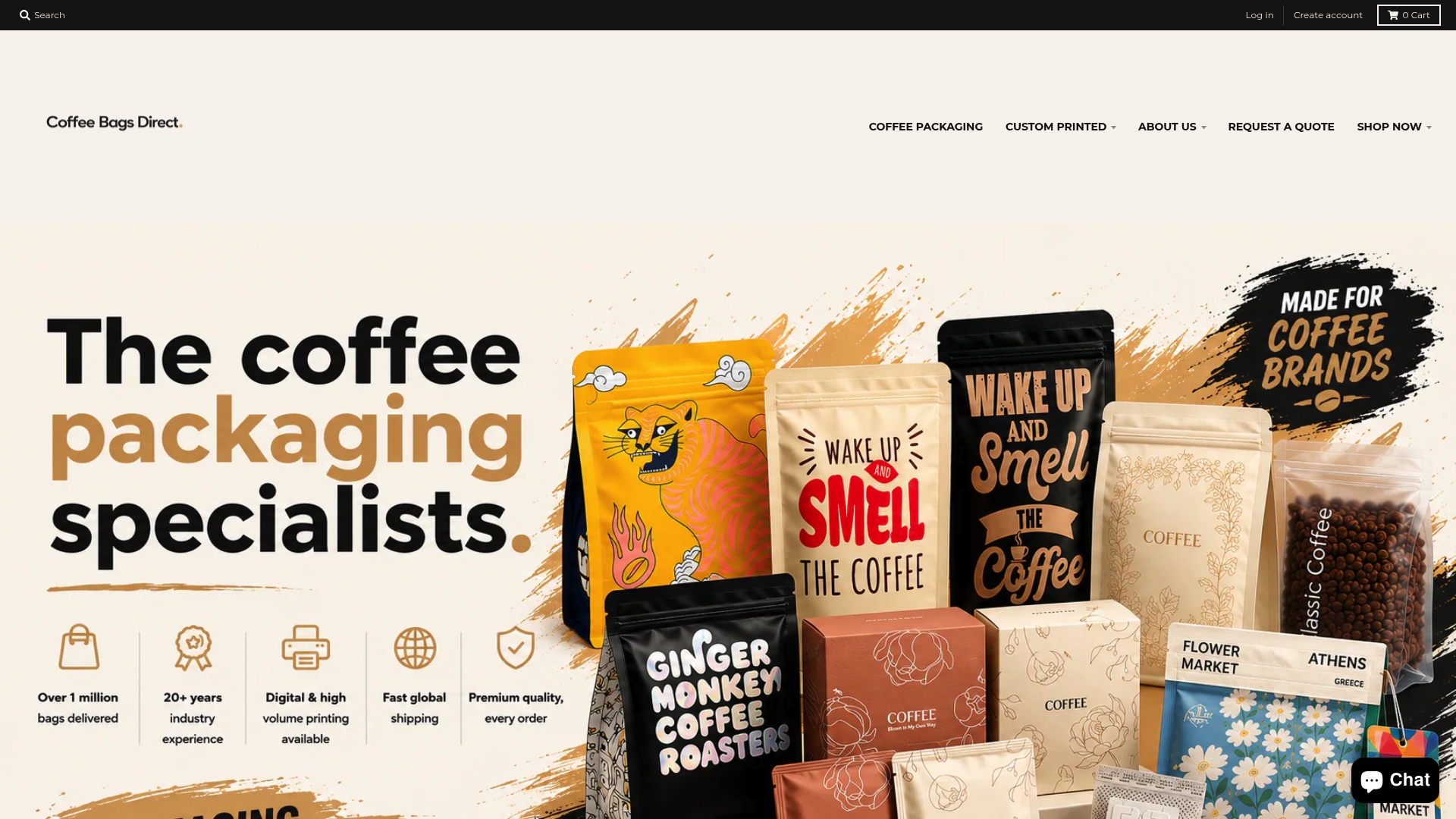
Coffeebagsdirect supplies compostable, recyclable, kraft, and custom printed coffee packaging to Australian roasters and cafes, with express digital printing for fast turnarounds and no requirement for large minimum orders. Their APCO partnership means the materials they recommend are aligned with Australia’s national packaging targets, giving you documented backing for any green claims on your product. Whether you need side gusset bags, box bottom bags, or custom printed pouches, you can request samples, get material guidance, and place orders online. Visit Coffeebagsdirect to get a quote or request a sample pack today.
Key Takeaways
Sustainable coffee in Australia requires both responsible sourcing and eco-friendly packaging working together across the full supply chain.
| Point | Details |
|---|---|
| Agroforestry cuts carbon significantly | Agroforestry systems sequester over 17,000 kg CO₂/ha/yr versus roughly 7,000 kg in unshaded farms. |
| Fertilizer management matters most | Nitrogenous fertilizers drive 65%–100% of coffee production’s carbon footprint, making low-input sourcing the key lever for sustainability. |
| Local providers cover the full chain | Zentveld’s, The Sustainable Coffee Company, and FTA Coffee address farming, roasting, and green bean sourcing respectively. |
| Packaging compliance is regulated | APCO’s national targets require substantiated eco claims; compostable and recyclable bags meet the standard when correctly specified. |
| Coffeebagsdirect completes the picture | APCO-partnered custom packaging in compostable, recyclable, and kraft materials, with express printing for Australian roasters and cafes. |