
Food Packaging Pouches: The Complete Australian Guide

What types of food packaging pouches are available in Australia?
The right pouch format can be the difference between a product that sells and one that sits on the shelf. Australian food businesses have access to a broad range of flexible packaging solutions, each engineered for specific product types, shelf-life requirements, and retail environments.
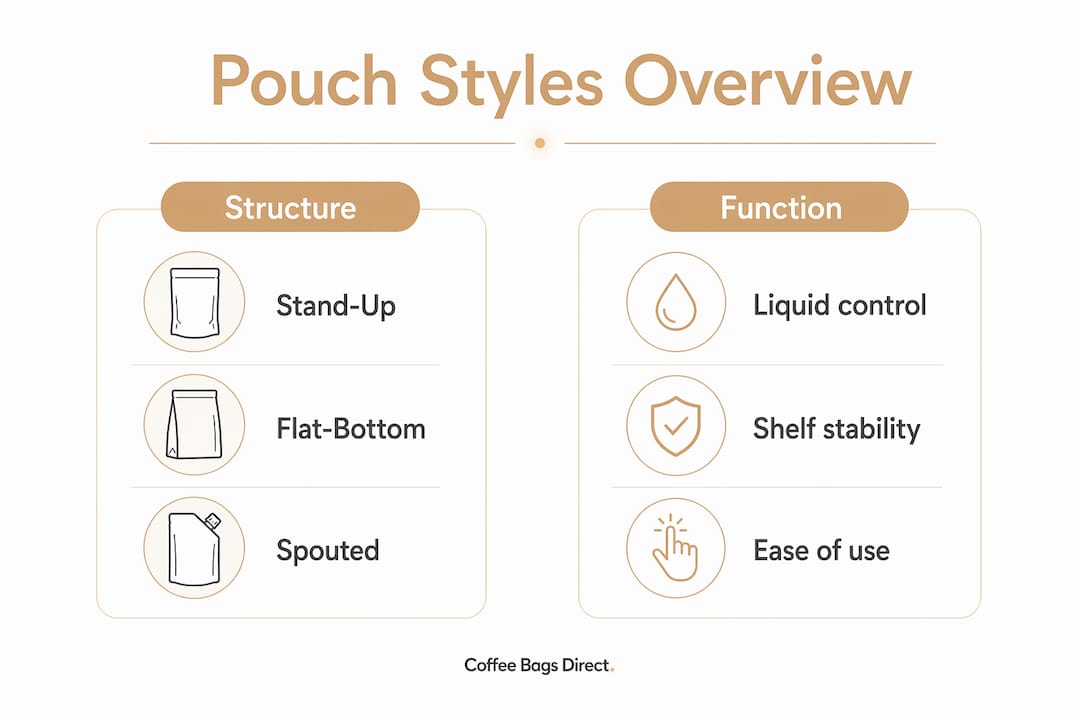
The four core categories cover most commercial needs:
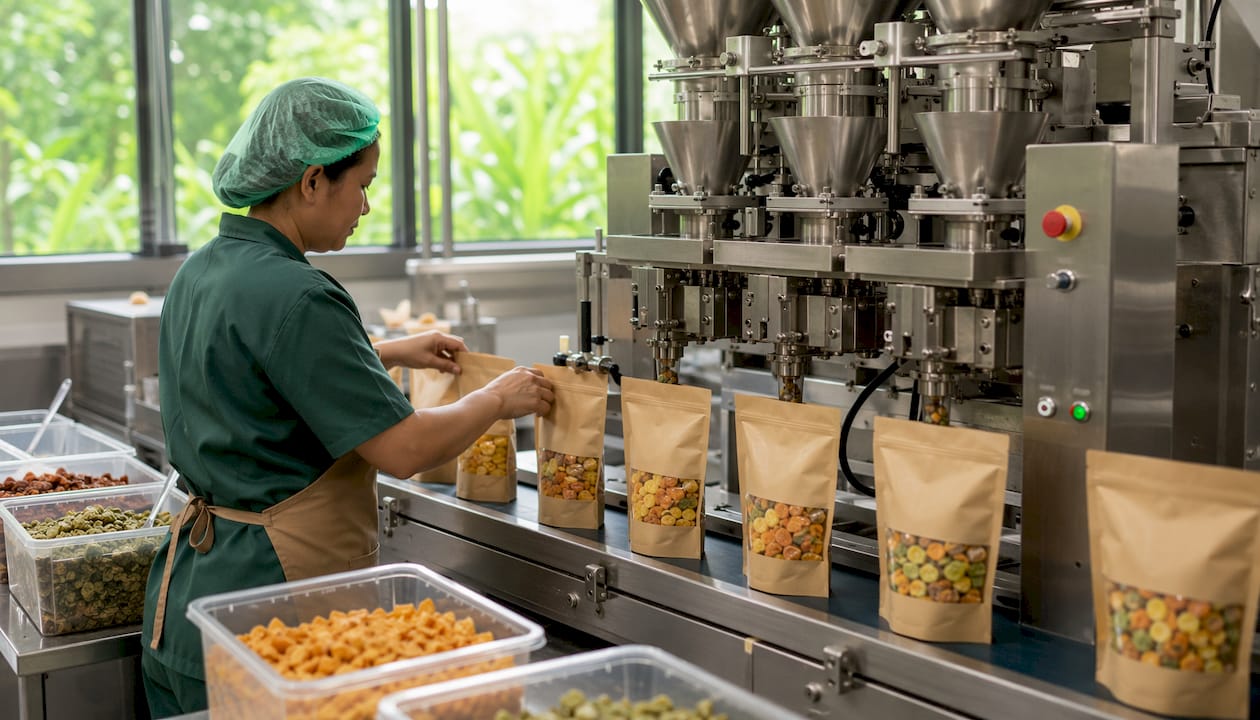
- Stand-up pouches: The most widely used format in flexible packaging. They stand upright on shelf, display well, and typically include resealable zipper closures for consumer convenience. Suited to dry goods, coffee, snacks, pet food, and frozen products.
- Flat-bottom pouches (box bottom): A premium format with a structured base that gives more panel space for branding and holds larger volumes without tipping. Popular for specialty coffee, tea, and premium snack brands.
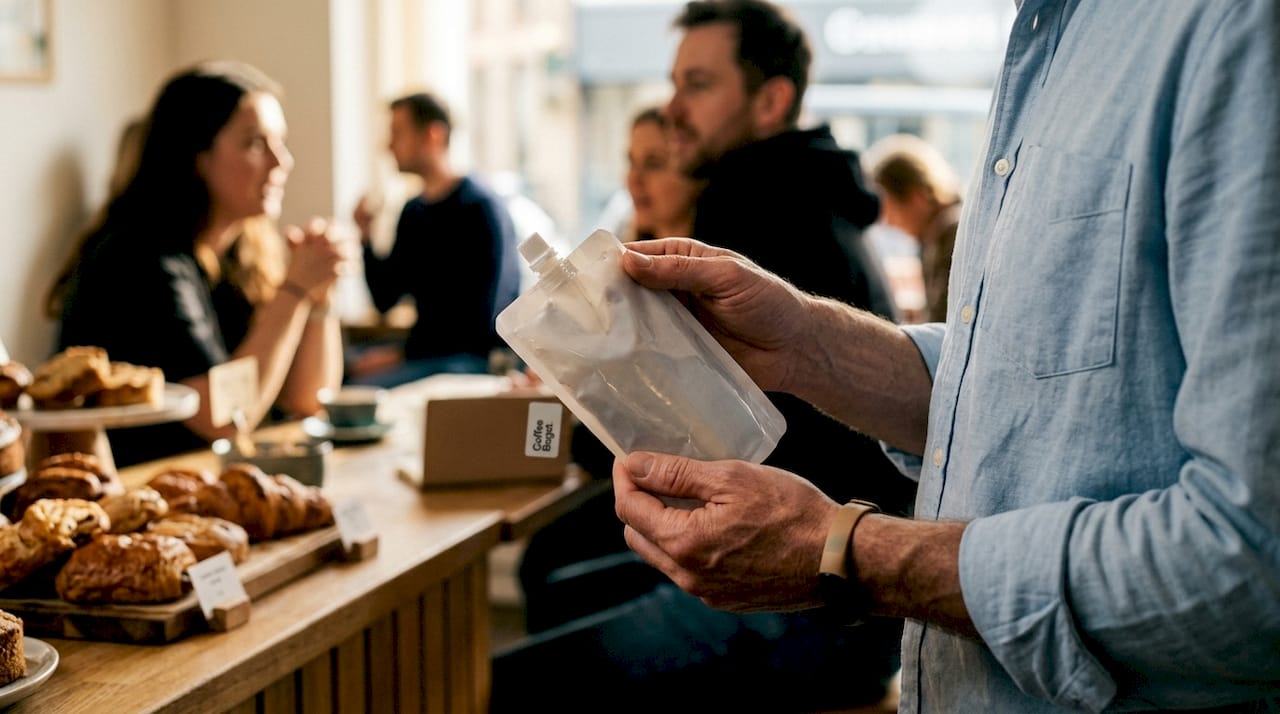
- Spouted pouches: Designed for liquids, purees, and semi-liquid foods. The integrated spout allows controlled dispensing and resealing, making them a practical choice for sauces, baby food, and beverages.
- Retort pouches: Built for sterilized and shelf-stable products. These laminate pouches withstand high-temperature processing, making them a flexible alternative to cans for products like ready meals, baby food, and camping rations.
Common features across all formats include moisture and oxygen barriers, heat-seal compatibility, tear notches for easy opening, and optional degassing valves for freshly roasted coffee or fermented foods.
Table of Contents
- How do different pouch styles perform for specific food products?
- What materials and customization options should you consider?
- What are the food packaging compliance requirements in Australia?
- How do you choose the right food packaging pouch for your product?
- What eco-friendly packaging options are available for Australian food businesses?
- How does pouch packaging affect storage and shelf life?
- Coffeebagsdirect offers custom eco-friendly pouches for Australian food brands
- Key Takeaways
How do different pouch styles perform for specific food products?
Choosing a pouch style is not just about aesthetics. Each format has structural and functional properties that directly affect how well your product is protected, how it performs at retail, and how your customer experiences it.
Stand-up pouches
Stand-up pouches dominate the flexible packaging market because they combine shelf presence with practical features. The gusseted base allows the pouch to stand independently, and the large front panel gives brands maximum print real estate. They work across a wide range of food products, from ground coffee and granola to dried fruit and protein powder.
Key features include:
- Resealable zipper closures for repeat-use products
- Clear windows for product visibility
- Degassing valves for freshly roasted coffee
- Hang holes for peg display
- Available in kraft paper, foil-lined, clear, and matte finishes
Flat-bottom pouches
The flat-bottom format adds a structured rectangular base, which gives the pouch a more rigid, box-like appearance. This makes it easier to stack and display, and the additional panel space is useful for brands with detailed labeling requirements. Coffee roasters and premium snack producers frequently choose this format when shelf differentiation matters.
Spouted pouches
Spouted pouches are the standard format for liquid and semi-liquid foods. The spout acts as a controlled pour point, and most designs include a resealable cap. They are widely used for baby food purees, fruit drinks, sauces, and liquid nutritional supplements. The format reduces spillage risk and extends product usability after opening.
Retort pouches
Retort pouches use a laminate of flexible plastic and metal foils that can withstand sterilization temperatures of 240–250°F (116–121°C) under high pressure. This process eliminates microorganisms including Clostridium botulinum, giving products a shelf life comparable to canned goods without the weight or rigidity of metal packaging. Baby and toddler foods, camping meals, fish products, and ready-to-eat curries are the most common applications in Australia.
What materials and customization options should you consider?
Material selection determines barrier performance, shelf life, print quality, and your product’s environmental footprint. Getting this right before you order is far more cost-effective than switching formats after launch.
Common materials
| Material | Barrier properties | Eco options | Best for |
|---|---|---|---|
| Kraft paper (foil-lined) | Moderate moisture, high oxygen | Compostable variants available | Coffee, tea, dry snacks |
| Clear plastic (PET/PE/PP) | Moderate moisture and oxygen | Recyclable mono-material options | Snacks, confectionery, produce |
| Foil laminate | High moisture, oxygen, and light | Limited recyclability | Long shelf-life, retort products |
| Mono-material films | High barrier (engineered) | Fully recyclable | Coffee, dry goods, sustainability-focused brands |
| Compostable films | Moderate barrier | Certified compostable | Eco-conscious brands, short shelf-life products |
Features that affect performance and usability
Matching the right closure and access features to your product type is as important as the material itself. A moisture and oxygen barrier protects product integrity, but a poorly chosen closure can undermine that protection after the first open.
- Resealable zippers: Standard on most stand-up and flat-bottom pouches; extend freshness after opening
- Tear notches: Provide easy, controlled opening without scissors
- Degassing valves: Allow CO2 to escape from freshly roasted coffee without letting oxygen in
- Clear windows: Let consumers see the product before purchase
- Heat-seal tops: Used for tamper evidence and initial product protection
Customization options
Print quality and finish choices have a direct impact on how your brand reads at retail. Digital printing suits short runs and fast turnarounds, while rotogravure delivers the sharpest results at high volumes. Coffeebagsdirect offers both methods, along with a full range of material and finish options including matte, gloss, kraft, and metallic.
Pro Tip: When selecting a window size for your pouch, balance product visibility with label compliance. Mandatory information under the Australia New Zealand Food Standards Code requires dedicated panel space, so a large window can reduce the area available for required text.
What are the food packaging compliance requirements in Australia?
Australian food packaging is governed by the Australia New Zealand Food Standards Code, and compliance is not optional. Selecting the wrong material or leaving insufficient label space can result in regulatory issues and costly reprints.
The key requirements every food business needs to understand:
- Labeling as part of the package: Under Standard 1.2.1, labeling and packaging form an integrated system. Artwork placement, panel allocation, and material choice must all account for mandatory information requirements from the start of the design process.
- Mandatory label information: Packaged food sold at retail must bear a label stating the food name, ingredient list, allergen declarations, country of origin, nutritional information, date marking, and contact details for the responsible supplier.
- Material safety: The Food Standards Code explicitly prohibits packaging materials that could cause bodily harm or discomfort if taken into the mouth. This applies to all materials in contact with food, including films, adhesives, coatings, and printing inks.
- Food-grade certification: Every component of the pouch system, not just the outer film, must be food-safe. This includes closures, laminates, and any functional additives like oxygen absorbers or moisture control inserts.
- Imported products: Labeling and packaging requirements apply equally to imported food sold in Australia, meaning overseas-manufactured pouches must still meet local standards.
Coordinating your pouch specification and label artwork early in the design process avoids the most common compliance failures. Windowed or heavily printed pouches require particular attention, since the printable area shrinks as design elements increase.
How do you choose the right food packaging pouch for your product?
The best pouch for your product is the one that protects it, meets compliance requirements, fits your production process, and works within your budget. Here is a practical framework for making that decision.
Start with your product’s physical properties. Is it dry, liquid, or semi-liquid? Does it produce gas after packaging (like freshly roasted coffee)? Is it heat-sensitive? These answers immediately narrow your format and material options.
Define your barrier requirements. Moisture-sensitive products like coffee, tea, and protein powders need high-barrier foil-lined or mono-material films. Fresh produce or short shelf-life products may perform well in lower-barrier clear films. Matching barrier performance to your food type is as important as the pouch shape itself.
Consider your closure and access needs:
- Products used multiple times after opening need a resealable zipper
- Single-serve or one-use products can use a heat-seal top with a tear notch
- Liquid products require a spout or specialized liquid-safe seal
Factor in labeling and compliance from day one. Your pouch dimensions and panel layout must accommodate all mandatory information under the Food Standards Code. If you are using a windowed pouch or a heavily printed design, map out label placement before finalizing the spec.
Evaluate cost and lead time. Plain stock pouches are available for immediate dispatch from Australian suppliers, making them practical for businesses launching quickly or testing a new product. Custom printed pouches require artwork approval and production lead time, which varies by printing method and order volume. Digital printing typically offers faster turnaround and lower minimum order quantities than rotogravure, which suits smaller or newer brands.
Pro Tip: Request physical samples before committing to a full order. A sample lets you test the seal, check the zipper action, and verify that your product fits the pouch dimensions correctly. It also gives you a real-world view of how the print finish will look on shelf.
What eco-friendly packaging options are available for Australian food businesses?
Sustainability is now a baseline expectation for many Australian food brands, not a point of difference. The good news is that the range of genuinely functional eco-friendly options has expanded considerably.
The main categories of sustainable food pouches currently available:
- Recyclable mono-material pouches: Made from a single polymer type (typically polyethylene or polypropylene), these pouches can enter standard soft plastics recycling streams. Mono-material high-barrier films now include retortable variants, meaning even shelf-stable products can be packaged in recyclable formats.
- Compostable pouches: Made from plant-based materials such as corn starch or wood pulp derivatives, certified compostable pouches break down in industrial composting conditions. In Australia, look for certification against AS 4736 (industrial composting) or AS 5810 (home composting) to verify genuine compostability claims.
- Kraft paper pouches: Kraft paper with a compostable or recyclable inner liner offers a natural aesthetic alongside improved environmental credentials compared to full foil laminates.
- Edible and water-soluble films: An emerging category, biopolymer-based edible pouches made from materials like whey protein isolate or soybean polysaccharides are being developed for dry and premeasured food applications. These dissolve in water and leave no packaging waste, though commercial availability at scale remains limited.
Coffeebagsdirect is a member of the Australian Packaging Covenant Organisation (APCO), which sets the national framework for sustainable packaging design and recovery in Australia. APCO membership signals a genuine commitment to reducing packaging waste across the supply chain, not just a marketing claim.
When evaluating eco options, weigh barrier performance against environmental benefit. A compostable pouch that fails to protect your product adequately will result in food waste, which carries its own environmental cost. The right choice balances both.
How does pouch packaging affect storage and shelf life?
The pouch you choose directly determines how long your product stays fresh and safe. This is not a secondary consideration. It is the core function of the packaging.
Barrier properties are the primary driver of shelf life in pouch-packed foods. Oxygen ingress causes oxidation in fats, oils, and roasted products, leading to rancidity and flavor loss. Moisture ingress softens dry products and can trigger microbial growth. A high-barrier foil-lined or engineered mono-material pouch slows both processes significantly compared to a basic clear film.
Heat sealing quality matters just as much as the film specification. A poor seal allows micro-leaks that compromise the barrier, regardless of how good the material is. Consistent seal integrity across every unit in a production run requires the right seal temperature, dwell time, and pressure for the specific film being used.
Storage conditions after packaging also affect shelf life. Even the best pouch cannot fully compensate for exposure to direct sunlight, high humidity, or temperature fluctuations during warehousing or retail display. Opaque or foil-lined pouches provide light protection that clear films cannot. For products with strict temperature requirements, the pouch specification should be confirmed with your cold chain or storage setup in mind.
Resealable closures extend the usable life of a product after opening, but they do not extend the sealed shelf life. The shelf-life clock starts from the moment the pouch is sealed at production, and the barrier film is what controls it from that point until first open.
Coffeebagsdirect offers custom eco-friendly pouches for Australian food brands
If you are sourcing food-grade pouches that combine genuine barrier performance with credible sustainability credentials, Coffeebagsdirect is built for exactly that. The range covers custom printed coffee bags and food pouches in compostable, recyclable, kraft, foil, and metallic materials, with both digital and rotogravure printing available depending on your run size and turnaround needs.
Express digital printing means you can get branded pouches without committing to large minimum orders, which suits new product launches, seasonal lines, and small-batch producers. As an APCO member, Coffeebagsdirect backs its eco claims with a recognized national framework, not just marketing language. Material selection guidance, sample requests, and artwork support are all part of the service, so you are not navigating compliance and spec decisions alone.
For food brands that need packaging that works on shelf, meets Australian regulatory requirements, and reflects a genuine commitment to sustainability, explore the full range or request a sample to get started.
Key Takeaways
Choosing the right food packaging pouch in Australia requires matching pouch style, barrier material, closure type, and label compliance to your specific product from the start of the design process.
| Point | Details |
|---|---|
| Pouch style drives function | Stand-up, flat-bottom, spouted, and retort formats each suit different food types and shelf requirements. |
| Barrier material determines shelf life | High-barrier foil or mono-material films protect against oxygen and moisture; match the film to your product’s sensitivity. |
| Compliance starts at design | Standard 1.2.1 mandates specific label information on all packaged food; panel space and material safety must be planned before artwork is finalized. |
| Eco options are now functional | Certified compostable (AS 4736/AS 5810) and recyclable mono-material pouches offer genuine sustainability without sacrificing barrier performance. |
| Coffeebagsdirect for custom eco pouches | Coffeebagsdirect offers APCO-aligned compostable and recyclable food pouches with express digital printing and low minimum orders for Australian food brands. |