
What Is PHA? A Guide for Australian Coffee Roasters

What is PHA and why does it matter for your packaging?
PHA, short for Polyhydroxyalkanoates, is a family of biodegradable biopolyesters produced naturally by bacteria during microbial fermentation of plant oils and sugars. The result is a genuinely compostable plastic alternative, grown from renewable feedstocks rather than petroleum. For Australian coffee roasters and cafés looking to move away from conventional plastic packaging, PHA represents one of the most promising materials available today.
Here is what you need to know at a glance:
- What it is: A biopolymer synthesized by microorganisms, stored as granules inside bacterial cells
- What it replaces: Petroleum-derived flexible plastics used in coffee bags and pouches
- Why it matters: Fully biodegradable and biocompatible, with no toxic breakdown products
- Who certifies it: Standards aligned with the Australian Packaging Covenant Organisation (APCO) guide responsible use
- The catch: Currently priced at a premium over conventional plastics
Table of Contents
- How PHA is produced, what it does, and what to watch for
- Coffeebagsdirect makes compostable coffee packaging straightforward
- Key Takeaways
How PHA is produced, what it does, and what to watch for
Bacteria produce PHA by fermenting carbon-rich feedstocks like plant sugars or oils under nutrient-limited conditions. The polymer accumulates as water-insoluble granules inside the cells, then gets extracted and processed into films or pellets suitable for flexible packaging. Over 150 different monomers can be combined within the PHA family, giving formulators precise control over flexibility, stiffness, barrier performance, and transparency.
Key production and performance points:
- Short-chain-length PHAs (3–5 carbon atoms) tend to be stiffer and more crystalline
- Medium-chain-length PHAs (6–14 carbon atoms) offer greater elasticity, useful for flexible coffee pouches
- PHA biodegrades in 20–45 days under industrial composting conditions with adequate moisture, oxygen, and microbial activity
- Home composting and landfill conditions rarely meet those thresholds, so verify access to a certified commercial facility before making compostability claims to your customers
- Thermal sensitivity during heat-sealing and printing requires suppliers with specific PHA processing expertise to avoid brittle seams or seal failure
Cost reality: The higher production cost of PHA compared to conventional plastics remains the primary barrier to mass adoption. Many Australian roasters manage this by using PHA selectively, for example in valve linings or inner liners, rather than across an entire bag construction. Choosing the right monomer formulation for your specific barrier and freshness requirements is critical. Packaging that preserves coffee freshness depends on oxygen and moisture barriers, and not every PHA grade delivers both.
Pro Tip: Ask your packaging supplier for the specific PHA grade and its certified compostability standard before printing any “compostable” claim on your bag. Australian Consumer Law requires that environmental claims be accurate and verifiable.

One terminology note worth flagging: in manufacturing and chemical plant settings, “PHA” also stands for Process Hazard Analysis, a safety review process used to identify operational risks. If you are sourcing packaging from industrial suppliers, confirm which meaning applies to avoid miscommunication during audits or compliance reviews.
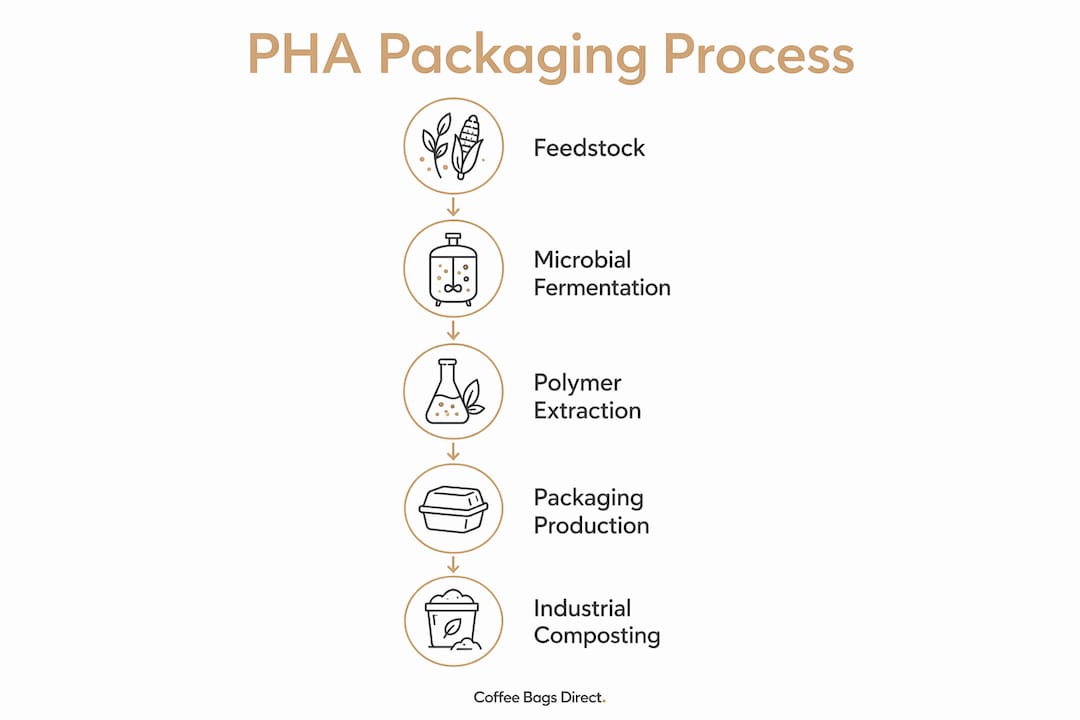
You can explore how PHA fits within broader sustainable packaging trends shaping the Australian coffee industry right now.
Coffeebagsdirect makes compostable coffee packaging straightforward
Coffeebagsdirect offers compostable coffee bags and flexible packaging options built for Australian roasters who want credible eco-friendly credentials without the guesswork of sourcing materials independently. As a partner of the Australian Packaging Covenant Organisation (APCO), Coffeebagsdirect aligns its product range with responsible packaging standards that matter to Australian retailers and consumers alike.
From custom printed coffee bags to express digital printing with fast turnaround, you get full brand customization alongside material guidance tailored to your roast and shelf-life needs. Request a sample to assess the material firsthand before committing to a full run.
Key Takeaways
PHA is a microbially produced biopolyester that biodegrades under industrial composting conditions, making it a credible but premium-priced alternative to petroleum plastics for coffee packaging.
| Point | Details |
|---|---|
| PHA definition | A family of biopolyesters produced by bacterial fermentation of plant oils or sugars. |
| Biodegradability window | Breaks down in 20–45 days under certified industrial composting conditions, not home compost. |
| Monomer variety | Over 150 monomers allow tuning of flexibility, barrier performance, and strength for specific packaging needs. |
| Cost consideration | PHA carries a production cost premium; many roasters use it selectively in bag components to manage expense. |
| Coffeebagsdirect | Offers APCO-aligned compostable coffee bags with custom printing and material guidance for Australian roasters. |