
Eco-Friendly Packaging Alternatives for Australian Businesses

The most practical eco-friendly packaging alternatives for Australian businesses are recycled paper and cardboard, molded fiber, certified compostable polymers (PHA/PLA with infrastructure caveats), recycled PET/HDPE, and reusable or refill systems. DCCEEW data shows that 6.84 million tonnes of packaging were placed on the Australian market in 2023–24, with about 41% going to landfill. That figure makes material choice and end-of-life planning non-optional for any business serious about reducing its footprint.
Here is a quick reference before you read further:
- Recycled paper/cardboard: Best for dry goods, shipping boxes, coffee bags. Kerbside recyclable in most Australian councils. Look for FSC certification as a responsible-sourcing trust signal.
- Molded fiber: Best for protective trays and fragile product inserts. Home or industrially compostable depending on binder; widely accepted in kerbside paper streams.
- Certified compostable polymers (PHA, PLA, starch blends): Best for flexible food pouches and coffee bags where barrier performance is needed. Require industrial composting facilities; verify AS/EN certification and the Australasian Recycling Label (ARL).
- Recycled PET/HDPE: Best for rigid containers and bottles. Strong kerbside recovery in Australia; food-contact grades available.
- Reusable/refill systems: Best for D2C subscriptions, bulk dispensing, and café programs. Highest lifecycle benefit when return rates are maintained.
Table of Contents
- What are the best eco-friendly packaging alternatives?
- How do you choose the right sustainable packaging for your product?
- How does packaging actually get disposed of in Australia?
- Which materials and eco-claims should you avoid?
- What should Australian businesses expect on cost and availability?
- What do real packaging decisions look like for coffee roasters and food brands?
- How do you move from audit to full rollout? A step-by-step checklist
- Key Takeaways
- Why a pragmatic, Australia-first approach matters more than chasing certifications
- Coffeebagsdirect can help you make the switch with confidence
- Useful sources for Australian packaging decisions
What are the best eco-friendly packaging alternatives?
Understanding the trade-offs between materials is where most businesses get stuck. The table below maps the key dimensions so you can narrow your shortlist before going deeper.
| Material | Best for | End-of-life pathway | Moisture/oxygen barrier | Cost/availability in Australia | Lifecycle trade-offs |
|---|---|---|---|---|---|
| Recycled paper/cardboard | Shipping boxes, dry goods, coffee bags | Kerbside recyclable (most councils) | Low–moderate (coatings help) | Cost-competitive at scale; widely available | Lower carbon than virgin paper; watch transport weight |
| Molded fiber | Protective trays, egg-carton inserts | Kerbside paper/compost (check binder) | Low | Moderate cost; growing local supply | Good for fragile goods; heavier than foam |
| Certified compostable film (PLA/PHA/starch) | Flexible pouches, coffee bags, food wrap | Industrial composting only (most types) | Moderate–high (material-dependent) | Premium price; variable lead times | Fails if landfilled or mixed into recycling |
| Recycled PET/HDPE | Rigid bottles, jars, clamshells | Kerbside recyclable | High | Competitive; food-contact grades available | Better lifecycle than virgin plastic at scale |
| Reusable/refill systems | D2C, subscriptions, café programs | Return/refill loop | N/A (durable) | Higher upfront; savings at volume | Best lifecycle outcome when return rates are high |
| FSC-certified paper flexible | Coffee retail bags, food pouches | Kerbside recyclable (mono-material) | Moderate (barrier coating needed) | Mid-range; available via specialist suppliers | Strong sourcing signal; pair with barrier coating |
Recycled paper and cardboard
Recycled-content paper and cardboard remain the most accessible sustainable packaging options for Australian businesses. Kraft paper, corrugated board, and paperboard are accepted in kerbside recycling across the vast majority of Australian councils, which means your customers can act on the end-of-life instruction without any extra effort. The practical limitation is barrier performance: uncoated paper absorbs moisture and offers minimal oxygen protection, so it suits dry goods, outer shipping cartons, and secondary packaging better than direct food contact. For coffee bags and food pouches, a mono-material paper construction with a thin barrier coating can work, but you need to verify that the coating does not disqualify the pack from the paper recycling stream.
FSC certification is the sourcing standard to look for. It confirms the fiber comes from responsibly managed forests, which matters both for your supply chain credibility and for consumer trust.
Molded fiber
Molded fiber (think egg-carton-style pulp trays) is an underused option for fragile product protection. It replaces expanded polystyrene and plastic foam inserts in shipping applications and can be made from recycled newsprint, sugarcane bagasse, or bamboo pulp. Most molded fiber products without synthetic binders are accepted in kerbside paper or compost streams, though you should confirm with your supplier whether any wet-strength additives affect compostability. Barrier performance is low, so molded fiber suits protective inserts and outer trays rather than primary food packaging.
Certified compostable polymers (PHA, PLA, starch blends)
Compostable films and pouches made from PLA, PHA, or thermoplastic starch can deliver the barrier performance that paper alone cannot. Aquapak’s Hydropol and similar industrial-starch polymers, for example, can provide grease and oxygen barriers while disintegrating fully in industrial composting within weeks under proper conditions. The critical caveat for Australia: most certified compostable films require industrial composting at temperatures above 55°C, which is not available through standard kerbside collection. Sending them to a home compost bin or general recycling contaminates both streams. Verify that any compostable film carries an AS 4736 (industrial) or AS 5810 (home) certification, and use the ARL to communicate the correct disposal pathway clearly on-pack.
Recycled PET and HDPE
When your product genuinely needs a rigid, high-barrier container, recycled PET (rPET) and recycled HDPE (rHDPE) are often the better lifecycle choice compared to switching to a heavier paper alternative. Both materials have strong kerbside recovery rates in Australia, and food-contact-grade recycled plastics are commercially available. The lifecycle benefit depends on recycled content percentage and local collection rates, so ask your supplier for the recycled content declaration and check that the format is accepted in your target market’s kerbside program.
Reusable and refill systems
Reusable packaging delivers the best lifecycle outcome of any format, but only when return rates are high enough to offset the production footprint of the durable container. Practical applications for Australian food and coffee brands include D2C subscription programs with deposit-return bags, bulk dispensing at retail, and café cup programs. The logistics of a return path add complexity, so this option suits brands with a direct customer relationship and the operational capacity to manage returns.
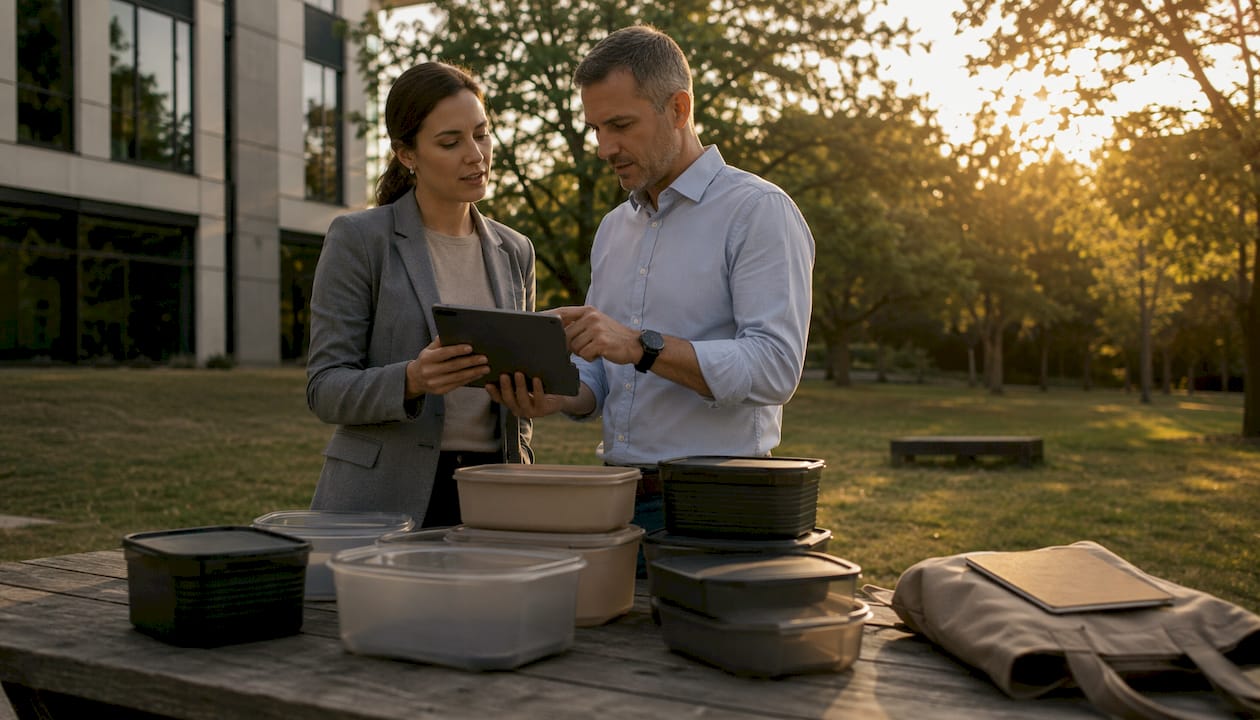
Pro Tip: Pair every pack with an ARL label and a single clear on-pack instruction (e.g., “Return to store” or “Industrial compost only”). Certified labels and clear end-of-life instructions considerably increase correct disposal rates and reduce contamination of recycling and compost streams.
How do you choose the right sustainable packaging for your product?
Function comes first. Before you evaluate any material on its sustainability credentials, confirm it can actually protect your product through transit and shelf life. A compostable pouch that fails its oxygen barrier test is not a viable option for roasted coffee, regardless of its certification.
Step 1: Define your barrier and performance requirements
- Oxygen barrier: Critical for roasted coffee, snacks, and ready meals. Measure your required oxygen transmission rate (OTR) and match it to the material’s specification sheet.
- Moisture barrier: Relevant for powders, dried goods, and anything with a long shelf life. Paper-based options often need a barrier coating or liner.
- Fragility and transit durability: Molded fiber and corrugated board absorb impact; flexible films do not.
- Food-contact compliance: Any material touching food must meet Australian food-contact regulations. Confirm with your supplier that the material has the relevant food-contact certification.
- Shelf life: Longer shelf life usually demands higher barrier performance, which narrows your material options.
Step 2: Map end-of-life infrastructure
Check the Australasian Recycling Label guidance and your target council’s kerbside rules before committing to a material. A pack that is technically recyclable but not accepted in your customers’ local program delivers no real-world benefit.
- Kerbside recyclable: paper/cardboard, rPET bottles, rHDPE containers (most councils)
- Industrial compost only: most certified compostable films and pouches
- Home compostable: limited formats; must carry AS 5810 certification
- Landfill: multi-layer laminates, unlabelled “biodegradable” plastics
Step 3: Run cost and supply chain checks
- Confirm minimum order quantities (MOQs) with your supplier. Stock mono-material options typically have lower MOQs than custom printed flexible packaging.
- For custom printed runs, digital printing suits small batches (under 1,000 units) with fast turnaround; rotogravure is more cost-effective above roughly 5,000 units.
- Request physical samples before committing to a production run. Test them under your actual storage and transit conditions, not just at room temperature.
The audit-to-rollout checklist
- Conduct a packaging audit: list every SKU, its current material, weight, and end-of-life pathway.
- Set measurable goals: landfill diversion rate, recycled content percentage, or compostable share by a target date.
- Shortlist two or three material candidates per SKU based on barrier needs and end-of-life fit.
- Request samples and run lab or shelf-life testing.
- Run a customer-facing pilot (500–1,000 units is a practical starting size for most small-to-medium brands).
- Measure outcomes: customer feedback, return/recycling rates, and any product quality issues.
- Update on-pack claims and ARL labels before full rollout.
- Scale production with confirmed supplier lead times and MOQs.
Pro Tip: When choosing a pilot size, 500–1,000 units gives you enough data to catch barrier or print issues without committing to a full production run. It also lets you test customer response to the new pack before locking in tooling costs.
How does packaging actually get disposed of in Australia?
That statistic has a direct implication for material selection: a pack that is technically recyclable or compostable only delivers its environmental benefit if the end-of-life system can actually process it. Choosing a material without checking local infrastructure is one of the most common and costly mistakes Australian businesses make.
The Australasian Recycling Label
The ARL is the most reliable on-pack recycling communication tool available in Australia. It uses a standardized icon system (recyclable, conditionally recyclable, not recyclable) verified against actual kerbside programs, so consumers get accurate disposal instructions rather than aspirational claims. APCO administers the ARL program, and businesses can apply to use it through the APCO member portal. Adding the ARL to your pack is one of the highest-leverage actions you can take to improve real-world recovery rates.
Industrial vs. home composting: the gap that trips most brands
Most certified compostable films and flexible pouches on the Australian market carry AS 4736 certification, which means they are designed for industrial composting at sustained high temperatures. Very few Australian councils offer kerbside collection for industrially compostable packaging. If your customers put an AS 4736-certified pouch in their home compost bin, it will likely not break down within a reasonable timeframe. If they put it in the recycling bin, it contaminates the plastic stream.
Home-compostable certification (AS 5810) is a higher bar and applies to fewer materials, but it is the only standard that allows on-pack “home compostable” claims in Australia.
What works and what usually fails in Australian councils
What works in most councils:
- Cardboard and paper (clean, dry, not contaminated with food)
- rPET bottles and containers (check the resin code)
- rHDPE bottles and containers
- Steel and aluminum cans
- Glass bottles and jars
What usually fails:
- Multi-layer laminates (foil/plastic/paper combinations)
- Flexible plastic films (most kerbside programs do not accept them)
- Unlabelled “biodegradable” plastics
- Industrially compostable films placed in kerbside recycling or home compost
- Contaminated paper (greasy pizza boxes, wet cardboard)
Which materials and eco-claims should you avoid?
Not every “green” claim on a packaging product reflects a genuine environmental benefit in the Australian context. Some materials actively cause harm by contaminating recycling streams or misleading consumers about disposal options.
Unlabelled “biodegradable” plastics
The term “biodegradable” has no regulated definition in Australia for packaging materials. A plastic labeled biodegradable may require specific temperature, UV exposure, and microbial conditions that do not exist in landfill or standard composting. WWF Australia flags that many single-use items already subject to bans in Australia were previously marketed as biodegradable alternatives. If a supplier cannot point you to a specific AS, EN, or OK Compost certification, treat the claim with skepticism.
Multi-layer laminates
Traditional flexible packaging laminates bond multiple materials (foil, PET, nylon, PE) together to achieve barrier performance. The result is a pack that is nearly impossible to separate for recycling. Most multi-layer laminates end up in landfill regardless of what the label says. If you need a flexible pouch with high barrier performance, ask your supplier about mono-material alternatives or certified compostable films instead.
Paper that is heavier than the plastic it replaces
Switching from a lightweight plastic film to a heavy paper-based pack is not automatically better for the environment. Lifecycle analysis shows that paper production and transport can carry higher carbon and water footprints than plastic in some applications, particularly when the paper is not recycled-content and travels long distances. Always request a lifecycle comparison from your supplier before making a straight swap.
Certifications to demand vs. terms to question
Demand these: FSC (responsible fiber sourcing), OK Compost Industrial or Home (TÜV Austria), AS 4736 (industrial compostable, Australia), AS 5810 (home compostable, Australia), ARL (on-pack recycling communication). These are independently verified and specific about conditions.
Question these: “biodegradable,” “eco-friendly,” “green,” “planet-friendly,” “natural” — none of these terms have a regulated standard in Australia and can be applied to almost any material without independent verification.
What should Australian businesses expect on cost and availability?
Pricing for sustainable packaging in Australia varies significantly by material, format, and order volume. Here is a realistic picture.
Cost shapes by material
- Recycled cardboard and paper: Generally cost-competitive with virgin-fiber equivalents at scale. Local converters are available in most states, which keeps lead times manageable.
- Molded fiber: Moderate premium over plastic foam inserts, but the gap has narrowed as local supply has grown. Custom tooling adds upfront cost.
- Certified compostable films (PLA/PHA/starch): Typically carry a premium over conventional flexible films. Prices vary with oil and feedstock markets, and lead times can extend to 8–14 weeks for custom printed runs from offshore suppliers.
- Recycled PET/HDPE: Competitive with virgin plastic at scale; food-contact grades command a small premium. Local supply is available for standard formats.
- Specialty bio-polymers: Biomass-based biodegradable materials show improved barrier and mechanical properties in recent research, but cost and scalability remain ongoing challenges. Treat these as emerging options rather than production-ready for most Australian brands in 2026.
Printing choices and their cost implications
Digital printing suits runs under roughly 1,000–2,000 units. Setup costs are low, turnaround can be as fast as a few days, and you can run multiple SKUs in a single order without plate changes. Rotogravure printing delivers superior color consistency and is more cost-effective above roughly 5,000 units, but requires engraved cylinders that add tooling cost and lead time. For most small-to-medium Australian roasters and food brands trialing a new sustainable pack, digital printing is the right starting point.
Typical project timeline
- Packaging audit and goal-setting: 1–2 weeks
- Supplier shortlisting and sample requests: 2–4 weeks
- Lab or shelf-life testing and food-contact checks: 4–8 weeks
- Pilot production run (500–1,000 units): 2–6 weeks depending on print method and supplier location
- Pilot measurement and feedback: 4–8 weeks in market
- Full production rollout: 4–12 weeks depending on volume and custom tooling
Where to source in Australia
- Local recycled-paper converters and board manufacturers supply corrugated and paperboard across most states.
- Compostable film suppliers often import certified films from Europe or Asia; confirm AS certification and lead times before committing.
- For custom printed flexible packaging (coffee bags, food pouches), specialist suppliers like Coffeebagsdirect offer both compostable and recyclable options with local advisory support and sample programs.
Pro Tip: Always request a physical sample in your actual product format before approving a production run. A film that passes a standard barrier test may still underperform under your specific storage temperature, humidity, or transit conditions.
What do real packaging decisions look like for coffee roasters and food brands?
Three common scenarios illustrate how material trade-offs play out in practice.
1. Roasted coffee retail bags
Coffee is the most demanding application for sustainable flexible packaging. Freshly roasted beans off-gas CO₂ and are highly sensitive to oxygen, moisture, and light. A standard kraft paper bag without a barrier liner will stale coffee within days. The practical options are:
- FSC-certified paper with a barrier coating or liner: Signals responsible sourcing and can be kerbside recyclable if the liner is mono-material. Check that the coating does not disqualify the pack from the paper stream.
- Certified compostable pouch (AS 4736): Delivers the barrier performance roasted coffee needs and carries a credible end-of-life story, provided your customers have access to industrial composting. Pair with a clear ARL label and on-pack instructions.
- Mono-material recyclable flexible film: Emerging option with improving barrier performance; check kerbside acceptance in your target market.
Coffeebagsdirect offers compostable and recyclable coffee bags specifically designed for Australian roasters, with material selection guidance and sample programs to help you test barrier performance before committing to a run.
The barrier vs. sustainability trade-off is real for coffee packaging. A compostable pouch that cannot maintain oxygen barrier integrity through a 12-week shelf life is not a viable option, regardless of its certification. Test first, then commit.
2. Chilled ready-to-eat meals
Chilled meals need high moisture and oxygen barriers, often combined with modified atmosphere packaging (MAP). Certified compostable films rarely meet MAP requirements at this stage. Recycled PET trays with a recyclable lidding film are the most practical sustainable option currently available in Australia. Confirm food-contact certification and check that both components are accepted in your target council’s kerbside program.
3. Fragile product shipping
Molded fiber inserts replace expanded polystyrene for fragile items like glass jars, ceramics, and electronics accessories. They are accepted in kerbside paper streams in most councils and can be made from recycled content. For coffee brands shipping gift sets or fragile retail packs, molded fiber inserts combined with a recycled corrugated outer carton is a fully kerbside-recyclable solution.
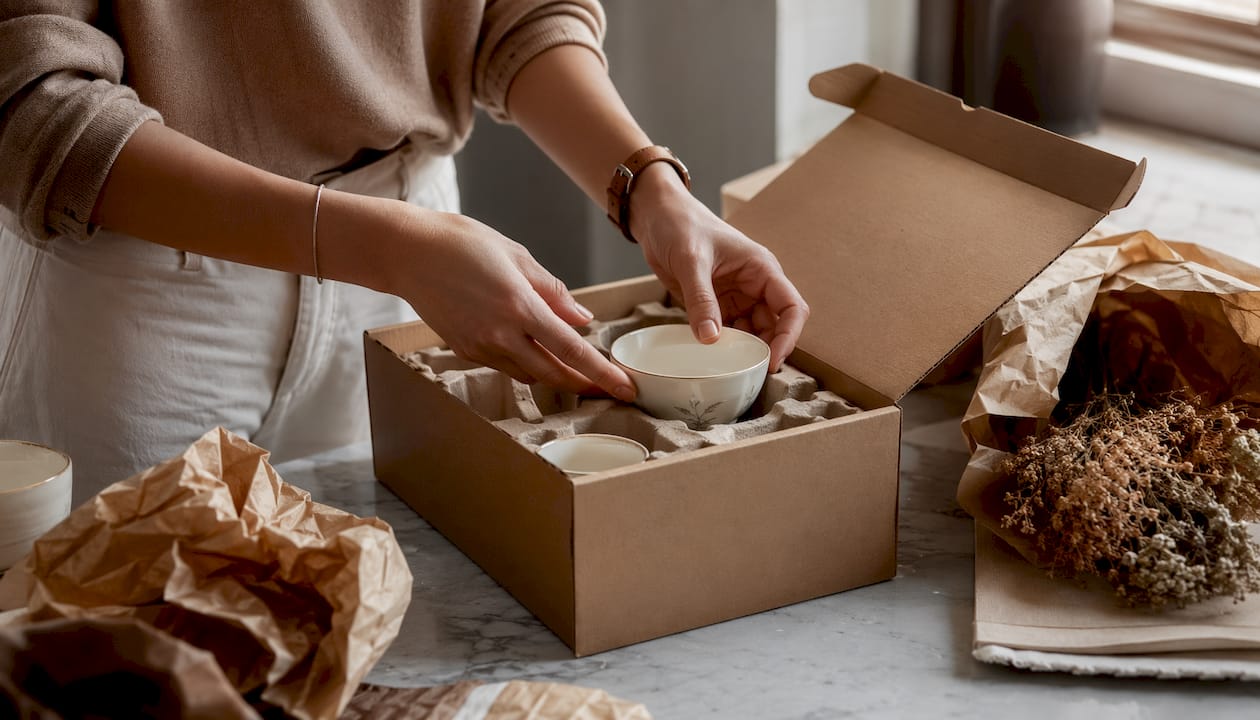
For gift-wrapping premium coffee, the combination of kraft paper, molded fiber, and a simple paper ribbon eliminates plastic entirely while maintaining a premium unboxing experience.
Pro Tip: During a pilot, include a freshness test alongside your standard transit test. Fill a sample of your new packs, seal them under your standard conditions, and open them at 4, 8, and 12 weeks to check aroma, color, and any signs of oxidation. This catches barrier failures before they reach your customers.
How do you move from audit to full rollout? A step-by-step checklist
Switching packaging is a project, not a purchase. Here is a practical numbered checklist with time estimates and cost notes.
-
Conduct a packaging audit (Week 1–2). List every SKU, its current material, weight, volume used per year, and current end-of-life pathway. This baseline tells you where the biggest landfill and cost impacts are. DHL’s guidance and British Business Bank both recommend inventorying current packaging before making any changes.
-
Set measurable goals (Week 2–3). Define targets: percentage of packaging that is recyclable or certified compostable by a set date, landfill diversion rate, or recycled content minimum. Tie these to APCO’s Australian Packaging Covenant commitments if your business is a signatory.
-
Shortlist materials (Week 3–5). For each SKU, identify two or three candidate materials based on barrier needs, end-of-life fit, and cost range. Use the comparison table in this article as a starting framework.
-
Request samples and run testing (Week 5–13). Order physical samples from at least two suppliers per material. Run barrier tests (OTR, moisture vapor transmission rate), food-contact checks, and transit simulation. Budget roughly 20–30% of your total project spend here.
-
Run a customer-facing pilot (Week 13–19). Produce 500–1,000 units of the preferred pack. Include ARL labels and clear on-pack disposal instructions. Gather customer feedback and track any product quality issues.
-
Measure outcomes (Week 19–27). Track recycling or composting uptake where possible, customer sentiment, and any product returns or quality complaints. Compare against your baseline.
-
Update on-pack claims and ARL labels (Week 27–29). Confirm that all sustainability claims are substantiated and that ARL icons are correctly applied. Check APCO’s ARL portal for the latest icon versions.
-
Scale production (Week 29 onward). Confirm supplier lead times, MOQs, and tooling costs for full production. Budget roughly 40–50% of total project spend on the first full production run, with the remainder split between testing, tooling, and certification checks.
Cost estimate note: For a typical small-to-medium Australian food or coffee brand, a packaging transition project might allocate roughly 20–30% to testing and samples, 20–30% to tooling and plate/cylinder setup, and 40–50% to the first production run. These proportions shift as volume scales, with tooling becoming a smaller share at higher volumes.
Key Takeaways
Choosing the right sustainable packaging for your Australian business comes down to matching material performance to your product’s barrier needs, then confirming the end-of-life pathway works in your customers’ local council area.
| Point | Details |
|---|---|
| Start with an audit | List every SKU’s current material and end-of-life pathway before selecting any alternative. |
| Match material to infrastructure | About 41% of Australian packaging was disposed to landfill in 2023–24; choose materials your customers can actually recover through kerbside or composting. |
| Pilot at 500–1,000 units | A small pilot catches barrier failures and customer response issues before full production commitment. |
| Use ARL and verified certifications | Demand FSC, AS 4736/AS 5810, or OK Compost certification; apply the ARL to every pack for correct disposal guidance. |
| Coffeebagsdirect for coffee and food brands | Coffeebagsdirect offers compostable and recyclable flexible packaging with sample programs, digital printing for small batches, and APCO partnership credibility for Australian roasters and food brands. |
Why a pragmatic, Australia-first approach matters more than chasing certifications
The most common mistake we see Australian food and coffee brands make is leading with a certification rather than a system. A business will commit to compostable pouches because the certification looks credible on the label, then discover six months later that none of their customers live near an industrial composting facility. The pouch ends up in landfill, the certification becomes a liability, and the brand has spent more money for a worse environmental outcome.
The packaging hierarchy that sustainability experts consistently recommend is the right starting point: eliminate unnecessary packaging first, then reduce what remains, then prioritize reuse and recycled-content materials, and only then consider certified compostable single-use formats where the infrastructure actually supports them. That order is not arbitrary. It reflects where the real lifecycle gains are.
For coffee roasters specifically, the barrier performance question is not optional. Roasted coffee is one of the most oxygen-sensitive food products on the market, and a pack that fails its barrier test is a product quality problem before it is a sustainability problem. The good news is that FSC-certified paper-based flexible packaging, combined with a mono-material barrier coating, can thread that needle: it signals responsible sourcing, performs well enough for most retail shelf-life requirements, and can be kerbside recyclable when the construction is right.
Coffeebagsdirect’s approach, including sample programs, material selection guidance, and APCO partnership, exists precisely to help Australian roasters and food brands work through these decisions without having to become packaging engineers. The pilot-first model is not just a sales process; it is the only way to confirm that a new pack actually performs in your specific conditions before you commit to a full run.
Coffeebagsdirect can help you make the switch with confidence
Switching to sustainable packaging is straightforward when you have the right materials, the right print method, and a supplier who understands Australian compliance requirements. Coffeebagsdirect offers compostable and recyclable flexible packaging options specifically designed for coffee roasters, cafes, and food brands, with sample programs that let you test barrier performance and print quality before committing to a production run.
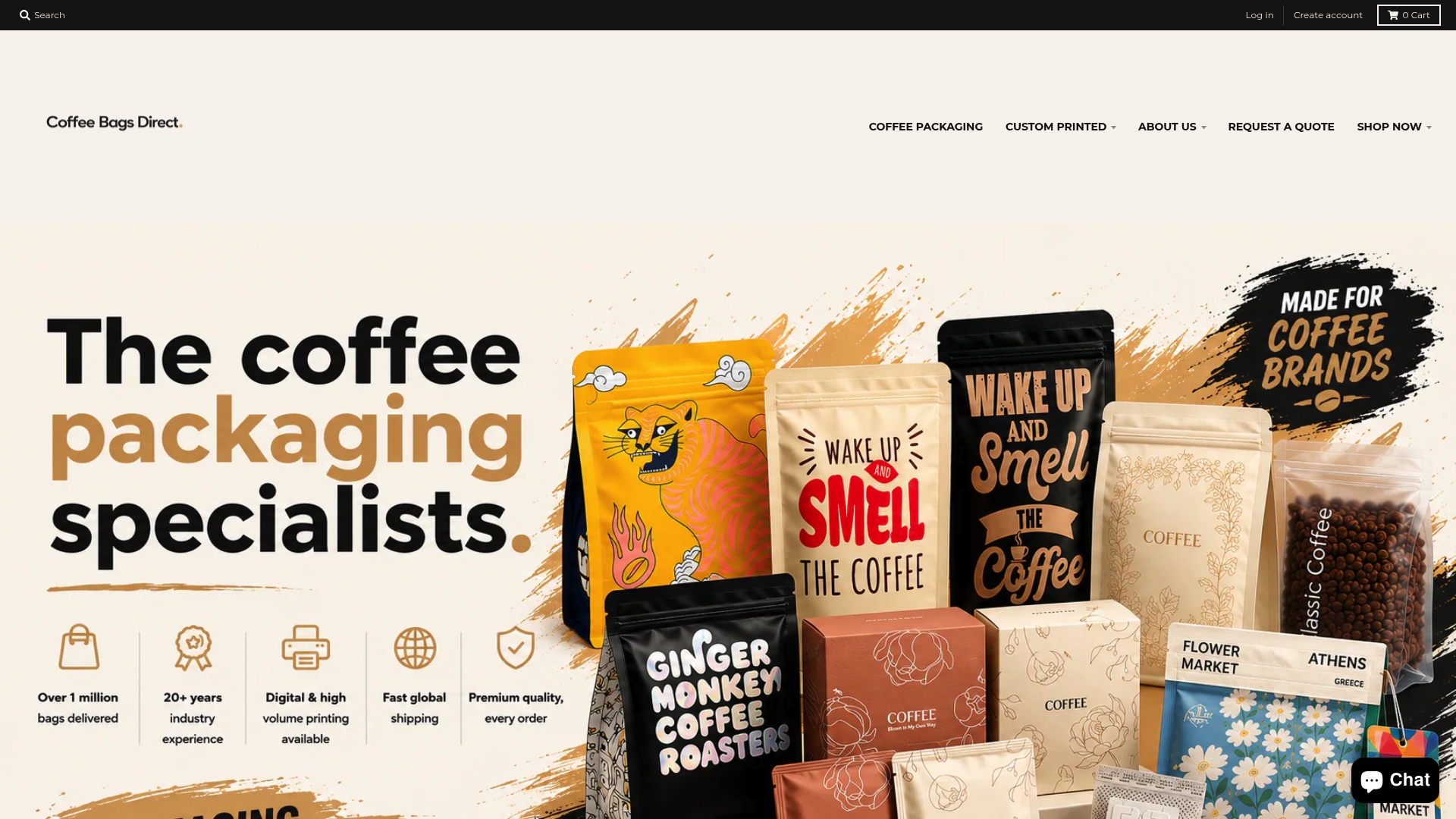
For small-batch trials, digital printing delivers fast turnaround with no plate costs, so you can test a new sustainable pack without a large upfront investment. For larger runs, rotogravure printing provides the color consistency and cost efficiency that high-volume brands need. Coffeebagsdirect’s partnership with APCO means the packaging guidance you receive is aligned with Australia’s national packaging commitments, not generic advice from an offshore supplier.
Ready to trial a compostable or recyclable pack for your next roast? Browse the full range of sustainable coffee packaging options or request samples directly to start your pilot. If you need custom artwork or want to explore digital and rotogravure printing options, the team can walk you through MOQs, lead times, and material choices for your specific product.
Useful sources for Australian packaging decisions
These are the primary references and standards to consult when selecting materials, verifying claims, and planning your end-of-life strategy.
- DCCEEW (Department of Climate Change, Energy, the Environment and Water): Australia’s primary source for packaging waste data, the National Plastics Plan, and policy on packaging reform. Check here for current landfill and recovery statistics.
- APCO (Australian Packaging Covenant Organisation): Administers the ARL program and Australia’s voluntary packaging covenant. Members can access the ARL portal, packaging design guidelines, and reporting tools. APCO’s guidance is the practical reference for businesses making DCCEEW-aligned commitments.
- Australasian Recycling Label (ARL): The standardized on-pack recycling communication system for Australia and New Zealand. Use the ARL portal to verify which icons apply to your pack format and to apply for use of the label.
- FSC (Forest Stewardship Council): The responsible fiber sourcing standard for paper and wood-based packaging. Look for FSC Mix or FSC Recycled certification on paper and cardboard products.
- AS 4736 (industrial compostable) and AS 5810 (home compostable): Australian Standards for compostable packaging. AS 4736 applies to industrial composting; AS 5810 is the higher bar for home composting claims. Both are independently certified by approved bodies.
- OK Compost Industrial / OK Compost Home (TÜV Austria): European compostability certifications widely recognized in Australia and often cited alongside AS standards. Equivalent to EN 13432 (industrial) and EN 14995 (home).
- Climate Action Accelerator: Practical overview of alternative packaging materials and end-of-life infrastructure considerations.
- WWF Australia: Practical guidance on single-use plastic alternatives and current Australian ban status for common items.
- Your state or territory’s environment agency: Council-specific kerbside rules vary. Check your state environment agency’s website (e.g., Sustainability Victoria, NSW EPA, Zero Waste SA) for the most current accepted materials list in your target market.
| Standard/Label | Scope | Why consult it |
|---|---|---|
| ARL | On-pack recycling communication | Verified against actual Australian kerbside programs |
| FSC | Fiber sourcing | Confirms responsible forest management for paper/cardboard |
| AS 4736 | Industrial compostability | Required for “industrially compostable” claims in Australia |
| AS 5810 | Home compostability | Required for “home compostable” claims in Australia |
| OK Compost Industrial/Home | European compostability | Widely accepted alongside AS standards; check for dual certification |
| APCO/ARL portal | Packaging design and labeling | Practical tool for applying ARL and meeting covenant commitments |