
Recyclable and Compostable Packaging: Australia Guide

In Australia, recyclable packaging means components your local kerbside or drop-off system accepts, verified using the Australasian Recycling Label (ARL). Compostable packaging means products certified to AS 4736-2006 (industrial composting) or AS 5810-2010 (home composting). The distinction matters immediately at disposal: a certified compostable bag sent to kerbside recycling contaminates the stream, and an uncertified “biodegradable” bag sent to compost may never break down.
- Recyclable: check the ARL on-pack symbol; confirm your council accepts the material at kerbside or via a drop-off program
- Industrially compostable: requires AS 4736-2006 certification; must reach 90% biodegradation within 180 days at 55–60°C in a commercial facility
- Home compostable: requires AS 5810-2010 certification; must reach 90% biodegradation within 12 months at ambient 20–30°C
- “Biodegradable” alone: not a regulated claim in Australia and not a reliable disposal guide
Coffeebagsdirect offers both certified compostable and recyclable coffee bag options, with material guidance built into the ordering process.
Table of Contents
- Which option is right for your product?
- What AS 4736-2006 and AS 5810-2010 actually require
- Which materials are recyclable or compostable in Australia?
- How Australian infrastructure affects real-world outcomes
- How to label packaging correctly in Australia
- How to verify supplier claims and avoid greenwashing
- Step-by-step: switching a SKU to certified sustainable packaging
- Key Takeaways
- Why getting the certification right matters more than the label
- Coffeebagsdirect can help you get this right
- Useful sources
Which option is right for your product?
Before specifying a material, map the disposal destination first. These questions cut the decision down fast.
- Does your end customer have FOGO (food organics and garden organics) kerbside collection? If yes, AS 4736-certified industrial compostable packaging may be accepted.
- Does your customer want to compost at home? You need AS 5810-2010, not just AS 4736.
- Is the material accepted at kerbside recycling in your target council area? If yes, choose a recyclable option and apply the ARL.
- Is the packaging in direct food contact or likely to carry wet waste? Compostable options simplify disposal since food residue disqualifies most recyclables.
- Are single-use plastic bans in your state relevant to your SKU? Check current state-level regulations before finalizing material.
Decision flow:
- FOGO collection available → AS 4736 compostable is viable; confirm with your waste contractor
- Consumer home-compost claim needed → require AS 5810 certificate with scope
- Kerbside recycling access confirmed → choose recyclable material and complete PREP/ARL assessment
- No reliable end-of-life infrastructure → recyclable is generally the safer default
Pro Tip: Record the certificate number, issuing body, and scope in your procurement files before placing a full order. Request batch-specific test data, not just a product brochure.

What AS 4736-2006 and AS 5810-2010 actually require
These two Australian Standards are the only defensible basis for a compostable claim. Understanding what each demands helps you ask the right questions of any supplier.
AS 4736-2006 (industrial composting):
- 90% biodegradation within 180 days at 55–60°C
- Disintegration into pieces smaller than 2mm within 12 weeks
- No toxic effect on plants or earthworms (ecotoxicity and worm tests required)
- Requires a formal certificate from an accredited laboratory, not just a test report
AS 5810-2010 (home composting):
- 90% biodegradation within 12 months at ambient 20–30°C
- Same family of ecotoxicity tests, but stricter because lower temperatures slow breakdown
- Tighter rules on film thickness, inks, and formulation
- Passing AS 5810 implies the product also meets industrial conditions; the reverse is not true
A product certified to AS 5810 is the stronger consumer-facing claim. It means the packaging will break down in a backyard bin, not just a commercial facility running at 55°C. If your customers are households, AS 5810 is the standard to require.
Certification action steps:
- Ask for the certificate itself, not a test summary
- Confirm the scope covers your exact product thickness and SKU codes
- Note the certificate number, issuing laboratory, and expiry date in your records
Which materials are recyclable or compostable in Australia?
Commonly recyclable at kerbside or drop-off:
- Paperboard cartons and cardboard boxes (clean and dry)
- PET bottles and rigid HDPE containers
- Certain mono-material polyethylene films via soft plastics drop-off programs (check current program availability in your state)
- Steel and aluminum cans
Commonly industrially compostable (AS 4736):
- PLA (polylactic acid) and most bioplastic blends — these require industrial composting and will not break down in a backyard bin
- Multi-layer compostable films used in coffee and food pouches
Often home compostable (AS 5810):
- Plant-fiber products: bagasse, wood pulp, and bamboo items commonly meet AS 5810 and are reliable for home-compost claims in food service
Mixed and problem materials:
- PLA-lined paper cups: compostable but not recyclable, and they contaminate recycling streams if sorted incorrectly
- Multi-layer flexible films: usually neither kerbside recyclable nor home compostable unless specifically certified
Pro Tip: Never assume PLA is home compostable. Most PLA meets AS 4736 only. Unless the supplier provides an AS 5810 certificate, treat it as industrial-only.
How Australian infrastructure affects real-world outcomes
Certification gets you to the gate. Infrastructure determines whether the packaging actually breaks down as intended.
Key outcome risks:
- Not all councils offer FOGO collection. Compostable packaging sent to general waste goes to landfill, where it will not biodegrade as certified.
- Industrial composters can and do reject loads containing non-certified or incorrectly labeled compostable plastics.
- Compostable plastics contaminate recycling streams when sorted with petroleum-based plastics at a materials recovery facility (MRF).
- Consumer mis-disposal is the most common failure point, especially when on-pack instructions are vague.
The ARL and PREP assessment process helps by giving consumers a clear, component-level disposal instruction backed by evidence. Pairing ARL with explicit compostability certification reduces mis-sorting.
Pro Tip: Pilot your compostable packaging in one council area where FOGO collection is confirmed before making a national claim. Map your composting partner or waste contractor before you print 10,000 bags.
How to label packaging correctly in Australia
Correct labeling is where certification becomes customer behavior. The ARL system, managed through the PREP tool, is the standard for on-pack recycling guidance in Australia. Many companies have updated their on-pack communication to include ARL recently, with thousands of SKUs now carrying the label.
Labeling best practices:
- Complete a PREP assessment before using any ARL symbol; ensure the symbol accurately reflects the assessment outcome for each component
- Give component-level instructions (e.g., “Lid: recycle kerbside / Bag: commercial compost only”)
- State “home compostable” only when an AS 5810 certificate is in hand
- State “commercial compost only” when the product is AS 4736 but not AS 5810
- Never use “compostable at home” and “biodegradable” interchangeably; they mean different things legally and practically
Do not claim:
- “Compostable at home” without AS 5810 certification
- “Biodegradable” as a standalone disposal instruction
- “Recyclable” without confirming kerbside or drop-off acceptance in the target market
Pro Tip: Add a short disposal line that matches your ARL outcome or AS certification, and consider a QR code linking to your certificate or council guidance. It reduces contamination and builds consumer trust.
How to verify supplier claims and avoid greenwashing
Procurement teams are the last line of defense before a misleading claim reaches a consumer. A quick rule: require either an AS 4736 or AS 5810 certificate with scope, not marketing copy.
Supplier question list:
- Provide the AS 4736 or AS 5810 certificate, not just a test report.
- Confirm the certificate scope covers your exact SKU, thickness, and ink system.
- Provide the PREP or ARL assessment reference for any recycling claim.
- Confirm which disposal stream the product is designed for: industrial compost, home compost, or kerbside recycling.
- Provide batch-level test data that matches the product you are ordering.
Trust-signal checklist:
- Certificate number and issuing accredited laboratory
- Scope: materials, thickness range, product codes
- Date issued and expiry
- Product listed on a public certificate registry where available
Red flags:
- Supplier offers only a “test report” with no certificate number or issuing body
- Vague “biodegradable” or “eco-friendly” language with no standard cited
- Cannot confirm whether the product is industrial or home compostable
- Certificate scope does not match your product’s thickness or formulation
Keeping documented evidence on file protects you if a retailer, council, or regulator questions your claims.
Step-by-step: switching a SKU to certified sustainable packaging
- Audit current packaging. List every component, its material, and its current disposal outcome.
- Identify the target end-of-life. Kerbside recycle, FOGO/industrial compost, or home compost — confirm infrastructure availability in your key markets.
- Select material and request certificates. For compostable options, require AS 4736 or AS 5810 with scope. For recyclable options, confirm ARL/PREP eligibility.
- Run a small pilot. Order a sample run, test barrier performance and shelf life with your product, and confirm disposal with a local council or composting partner.
- Update on-pack labeling. Complete PREP assessment, apply ARL, and add component-level disposal copy.
- Scale and monitor. Track contamination feedback from your waste contractor and update labeling if council infrastructure changes.
Supplier RFQ checklist:
- Batch certificates (AS 4736 or AS 5810) with scope
- Sample performance data: barrier properties, seal strength, shelf-life results
- Ink and adhesive compliance for compostability (critical for AS 5810)
- Minimum order quantities, lead times, and express options for pilots
Cost and timing notes:
- AS 5810-certified materials generally cost more than AS 4736 options because the standard is harder to meet
- Express digital printing, available through suppliers like Coffeebagsdirect, lets you run small pilot batches without committing to a full rotogravure print run. See sustainable packaging insights for more on material selection and printing trade-offs.
- If your customer base is primarily households, the premium for AS 5810 is usually worth it. If you supply food-service operators with FOGO collection, AS 4736 may be sufficient.
For a deeper look at how packaging trends in 2025 and beyond are shaping material choices, the Spaceman packaging trend analysis is a useful reference.
Key Takeaways
Recyclable and compostable packaging require different certifications, infrastructure, and labeling — matching the material to the actual disposal stream is what determines whether the claim holds up.
| Point | Details |
|---|---|
| Use ARL for recyclability | Complete a PREP assessment before placing any ARL symbol on-pack. |
| Require AS 4736 or AS 5810 | Demand a certificate with scope, not a test report or marketing copy. |
| AS 5810 is the stronger claim | Products passing AS 5810 also meet industrial conditions; AS 4736 items may fail at home. |
| Match material to infrastructure | Compostable packaging sent to general waste goes to landfill; confirm FOGO access first. |
| Coffeebagsdirect for certified options | Coffeebagsdirect supplies both certified compostable and recyclable coffee bags with material guidance and sample ordering. |
Why getting the certification right matters more than the label
The most common mistake we see from businesses switching to eco-friendly packaging is treating the label as the goal rather than the outcome. A bag printed with “compostable” but certified only to AS 4736 will sit intact in a backyard bin for years. A bag labeled “recyclable” without a PREP assessment may be rejected at the MRF. Neither outcome serves your brand or the environment.
Coffeebagsdirect works with roasters and food brands navigating exactly this transition. Our APCO partnership reflects a commitment to packaging that performs at end-of-life, not just at point of sale. The most useful thing you can do before switching materials is request samples, test them against your actual product, and confirm disposal with your local council or waste contractor. We can help you work through that process, from material selection to print compliance.
Coffeebagsdirect can help you get this right
Switching to certified sustainable packaging is straightforward when you have the right supplier behind you. Coffeebagsdirect offers compostable and recyclable coffee bags certified to Australian standards, with custom printing options that work for pilot batches and full production runs alike.
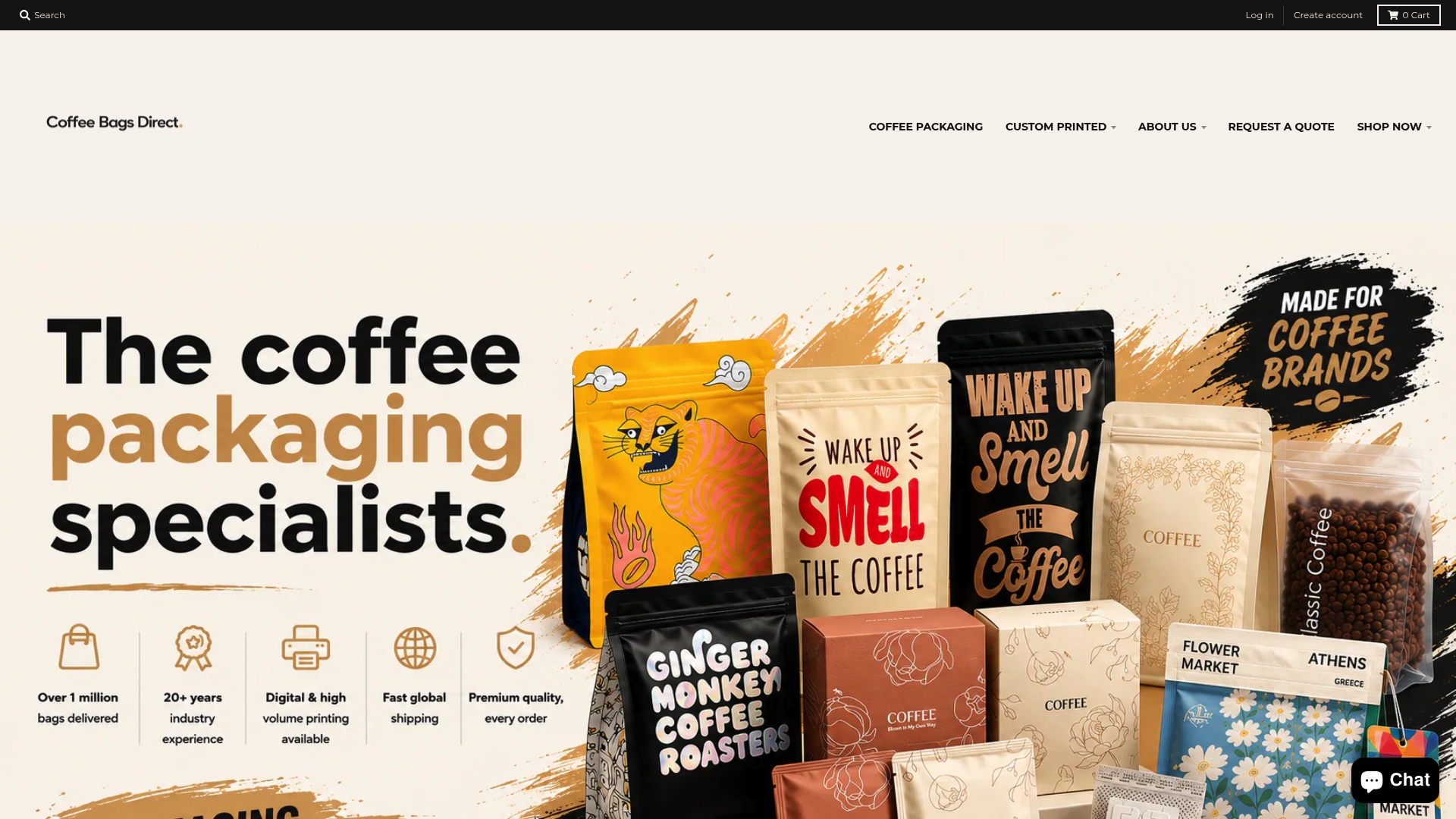
What sets the process apart is the built-in material guidance. You can request samples before committing to a full order, get clarity on which certification fits your disposal stream, and use express digital printing to test your artwork and labeling on a small run first. For businesses ready to update on-pack ARL copy or switch to a certified compostable format, the custom printed options page walks through printing methods, minimum quantities, and turnaround times. Request a sample or get a quote directly through the site.
Useful sources
- AS 4736-2006 and AS 5810-2010 standards: Bioplastics Australia explains both standards, temperature requirements, and the difference between the Seedling logo (industrial) and the ABA Home Compostable logo
- Detailed test requirements: Adventpac Australian Compostability Standards guide covers disintegration, ecotoxicity, and worm test requirements for both standards
- ARL and PREP tool: Australasian Institute of Packaging explains how to start using the ARL on-pack and access the PREP assessment
- Compostable vs. biodegradable: DPack Australia guide covers AS 4736 vs. AS 5810 for importers and procurement teams
- Contamination and recycling streams: US EPA FAQ on plastic recycling and composting explains why compostable plastics contaminate recycling streams
- Council and FOGO acceptance: Check your local council website or contact your waste contractor directly to confirm FOGO collection and industrial composting acceptance in your area
- APCO and packaging covenant: The Australian Packaging Covenant Organisation (APCO) sets national targets for sustainable packaging and provides guidance on recyclability and labeling compliance