
Takeaway Iced Coffee Cups: Your 2026 Guide for Cafes

What are the best takeaway iced coffee cups for Australian cafes?
Australian cafes have more choices than ever when it comes to cold cup packaging. The right option depends on your volume, your brand, and how seriously you take sustainability. Here is a quick snapshot of what is available right now:
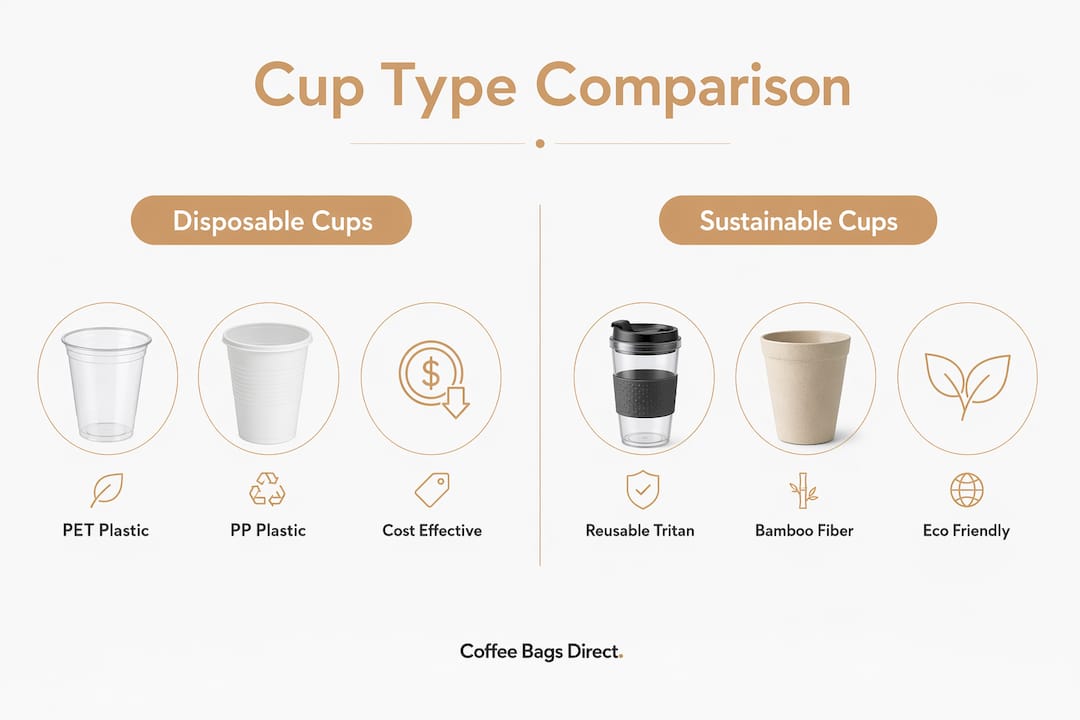
- Disposable cups: Single-use PET or PP plastic cups, typically clear, in standard Australian sizes: 340ml (12oz), 450ml (16oz), and 590ml (20oz). Cost-effective for high-volume service, though they carry the highest environmental footprint.
- Reusable cups: Tritan copolyester or stainless steel options designed for cold drinks. KeepCup’s Cold Cup Original, designed and made in Australia, is a well-known example, available in 340ml (12oz), 450ml (16oz), and 590ml (20oz) to match standard cafe pour sizes.
- Compostable cups: Plant-based or bamboo fiber alternatives that break down under the right conditions. Western Australia has already moved to mandate compostable single-use cups as part of its single-use plastic ban, signaling the direction of the broader market.
- Customizable cups: Any of the above can carry your branding. Digital printing now makes short-run custom orders practical for independent cafes, not just chains.
- Key accessories: Lids (press-fit, dome, splashproof, straw-friendly), paper or Tritan straws, and sleeve wraps. Lid compatibility with your chosen cup is a purchasing decision that often gets overlooked until it causes problems at the counter.
- Trusted suppliers in Australia: Detpak, KeepCup, Creative Cafe Company, and Coffeebagsdirect all serve the Australian market with varying specializations across disposable, reusable, and custom-printed options.
Table of Contents
- How do the main types of iced coffee cups compare?
- How to choose the right cold cup for your business
- Why sustainable cup materials matter for Australian cafes
- Coffeebagsdirect makes custom eco-friendly cups straightforward
- Key Takeaways
How do the main types of iced coffee cups compare?
Choosing between cup types is not just a cost decision. Material, size, and end-of-life disposal all affect your operations and your customer’s experience.
Disposable plastic cups
Clear PET (polyethylene terephthalate) and PP (polypropylene) cups dominate the disposable segment. PET offers excellent clarity, which matters when you are serving a visually appealing layered iced latte. PP is slightly more flexible and heat-tolerant. Both are common in high-volume cafes due to low unit cost and wide lid compatibility, but neither breaks down in standard Australian kerbside recycling without specific soft-plastics programs.
Reusable cups for cold drinks
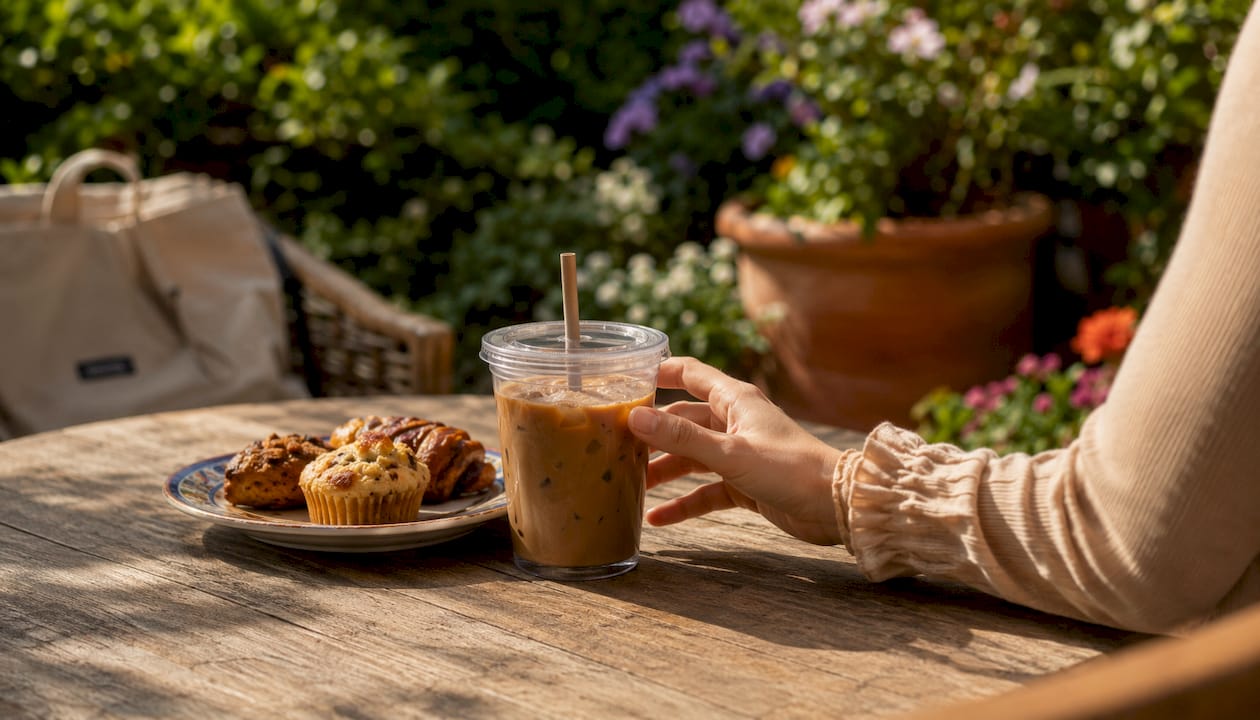
Tritan copolyester has become the material of choice for reusable cold cups. It is BPA-free, shatter-resistant, and clear enough to show off the drink. The KeepCup Cold Cup Original uses 50% recycled Tritan and comes with a press-fit lid and a choice of coffee or bubble tea straw. Stainless steel options like KeepCup’s Commuter Cold Cup add vacuum insulation, keeping drinks cold through a long commute. Both styles fit standard car cup holders, which matters for takeaway customers. Reusables reach a positive environmental impact after about 20 uses, making them a strong long-term choice for cafes that run a cup-return or bring-your-own program.
Compostable and bamboo fiber cups
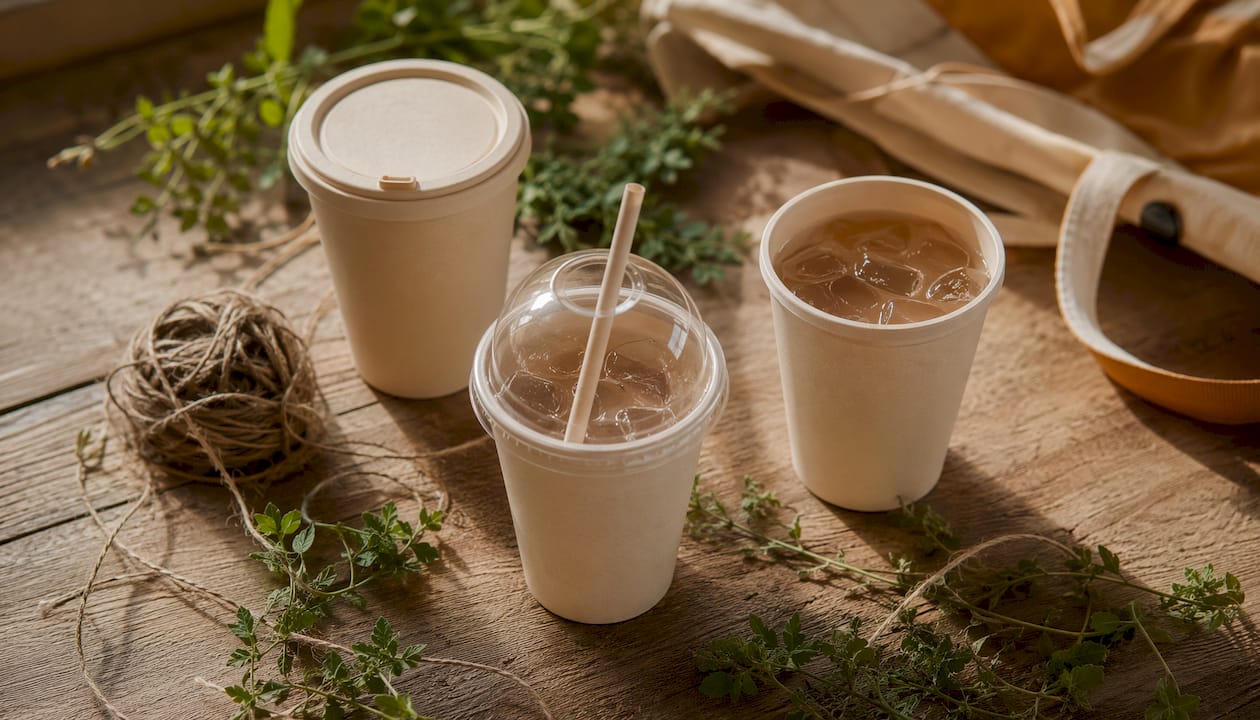
Bamboo fiber composites blended with corn starch and food-grade silicone offer a biodegradable path for cafes that want to move away from plastic entirely. These cups are safe from -20°C to +110°C and are commercially dishwasher safe, making them practical for reuse before composting. The catch: they require access to commercial composting infrastructure, which is not uniformly available across all Australian states. Check your local council’s industrial composting facilities before committing to a compostable-only program.
Comparison table
| Cup Type | Material | Size Range | Customization | Environmental Impact | Best Use Case |
|---|---|---|---|---|---|
| Disposable plastic | PET or PP | 340ml (12oz), 450ml (16oz), 590ml (20oz) | Limited (sleeve or label) | Highest footprint; recyclable in some programs | High-volume, cost-sensitive cafes |
| Reusable (Tritan) | 50% recycled Tritan | 340ml (12oz), 450ml (16oz), 590ml (20oz) | Branded versions available | Positive impact after ~20 uses | Loyalty programs, dine-in, bring-your-own |
| Reusable (stainless) | recycled steel | 340ml (12oz), 450ml (16oz), 590ml (20oz) | Branded versions available | Low footprint, long lifespan | Commuter-focused cafes, premium positioning |
| Compostable | Bamboo fiber, corn starch | 340ml (12oz), 450ml (16oz), 590ml (20oz) | Full custom print available | Biodegradable with commercial composting | Eco-focused cafes with composting access |
| Custom-printed disposable | PET, PP, or paper | 340ml (12oz), 450ml (16oz), 590ml (20oz) | Full digital print | Varies by base material | Brand-forward cafes, events, seasonal menus |
Pro Tip: Pair your cup choice with a compatible lid from the start. Press-fit lids, dome lids, and splashproof straw-valve lids each suit different drink styles. A lid and straw accessory mismatch is one of the most common and avoidable sourcing mistakes cafes make.
How to choose the right cold cup for your business
The decision comes down to five practical factors. Work through each one before you place an order.
Volume and operational fit
High-volume cafes serving hundreds of cold drinks daily will find disposable PET cups the most operationally straightforward. Staff do not need to manage cup returns, washing, or stock of multiple sizes. For cafes with a loyal regular customer base, a reusable cup program supported by a small discount for bring-your-own cups can reduce ongoing disposable costs while building goodwill.
Size selection
Standard Australian sizes are 340ml (12oz), 450ml (16oz), and 590ml (20oz). Most cafes stock at least two of these. The 450ml (16oz) is the most versatile, covering the majority of iced latte and cold brew orders without excess ice dilution.
Budget and total cost of ownership
Disposable cups have the lowest upfront unit cost but accumulate as an ongoing expense. Reusable cups require a higher initial outlay but reduce per-serve cost over time, particularly if customers bring their own. Compostable cups typically sit at a price point above standard disposables. Factor in lid and straw costs, which can add meaningfully to per-serve cost depending on your supplier.
Supplier evaluation criteria
When assessing suppliers, look at:
- Minimum order quantities (MOQs): Some custom-print suppliers require large runs that do not suit smaller independents. Coffeebagsdirect offers express digital printing with low MOQs, making custom branding accessible without committing to warehouse-scale stock.
- Lead times: Standard print runs can take several weeks. Express digital options can turn around orders significantly faster, which matters when you are launching a seasonal menu or a new location.
- Reliability and local support: Suppliers with Australian warehousing and customer service reduce the risk of stock-outs and simplify returns or quality issues.
Compliance with Australian food safety and packaging regulations
All cups used for food and beverage service must meet Australian food-grade safety standards. PET and PP plastics used in cold cups are generally BPA-free and food-safe when sourced from reputable suppliers. Bamboo fiber cups with FDA/LFGB-approved food-grade testing meet the same standard. Western Australia’s compostable cup mandate is the most significant recent regulatory shift, and other states are watching closely. Staying ahead of packaging legislation protects your business from sudden compliance costs.
Brand perception and customer experience
Your cup is the last physical touchpoint in a customer’s experience. A clear, well-branded cold cup reinforces quality and makes your drinks more shareable on social media. Custom printed cups consistently support brand recall and customer retention, particularly for cafes competing in busy urban markets.
Why sustainable cup materials matter for Australian cafes
The environmental case for moving away from single-use plastic is well established, but the practical path forward depends on which materials actually work within Australia’s waste infrastructure.
Material impacts at a glance
Standard PET and PP plastic cups are durable and low-cost, but they contribute to landfill when not properly sorted for recycling. Australia’s kerbside recycling systems vary by council, and contamination rates mean many plastic cups end up in landfill regardless of the recycling symbol on the base. Paper cups with plastic linings present a similar problem: the liner prevents composting and complicates recycling.
Compostable materials, including plant-based PLA and bamboo fiber composites, offer a genuine end-of-life solution, but only where commercial composting infrastructure exists. The WA compostable cup initiative is a strong signal that state governments are moving toward mandating these materials, and cafes that adopt them early avoid a forced transition later.
Reusable cups made from recycled Tritan or stainless steel carry the lowest lifecycle footprint once a customer uses them consistently. The NSW EPA’s Reusable Cafe Project found that reusables deliver positive environmental outcomes after approximately 20 uses, a threshold most regular customers reach within a month.
Sustainability callout: Offering reusable cold cups alongside disposables signals environmental responsibility to customers and aligns with Australia’s national waste reduction targets, without requiring a complete operational overhaul.
Coffeebagsdirect’s APCO partnership and educational resources
Coffeebagsdirect is a partner of the Australian Packaging Covenant Organisation (APCO), the body responsible for coordinating Australia’s transition to sustainable packaging. That partnership is not just a logo on a webpage. It means Coffeebagsdirect actively engages with evolving packaging standards and provides cafes with guidance on which materials meet current and anticipated regulatory requirements. Their educational resources on compostable versus recyclable materials are particularly useful for cafe owners navigating the difference between materials that are technically compostable and those that are practically compostable given local infrastructure.
Practical steps to reduce packaging waste
- Switch to compostable or recycled-content cups where your local council supports industrial composting.
- Introduce a small discount for customers who bring a reusable cup, a low-cost incentive that builds loyalty and reduces disposable volume.
- Audit your lid and straw accessories. Switching to paper straws or straw-free sip lids removes a significant source of single-use plastic without changing your cup.
- Choose suppliers with transparent material sourcing and food-safety certifications (FDA/LFGB for bamboo fiber; food-grade PET certification for plastic).
- Review your packaging choices annually against state-level regulatory updates, particularly in WA and Victoria, where single-use plastic legislation is most active.
Sustainability comparison
| Material | Recyclable (AU kerbside) | Compostable | Reusable | Food-Safe Standard |
|---|---|---|---|---|
| PET plastic | Varies by council | No | No | BPA-free, food-grade |
| PP plastic | Varies by council | No | No | BPA-free, food-grade |
| Bamboo fiber composite | No | Yes (commercial) | Yes (before composting) | FDA/LFGB approved |
| Recycled Tritan | Limited | No | Yes | BPA/BPS-free |
| Recycled stainless steel | Yes | No | Yes | Food-grade |
| PLA (plant-based) | No | Yes (commercial) | No | Food-grade |
Coffeebagsdirect makes custom eco-friendly cups straightforward
Custom-branded, eco-friendly cold cups are no longer a luxury reserved for large chains. Coffeebagsdirect gives independent cafes and growing roasters direct access to custom printed packaging with low minimum order quantities, express digital printing, and material options that include compostable and recyclable substrates.
Where many suppliers require large bulk commitments before they will print your logo on a cup, Coffeebagsdirect’s express digital printing service means you can order a practical quantity, test the design with your customers, and scale up without locking into excess stock. Their APCO partnership means the materials they recommend are aligned with Australian packaging standards, not just imported specs that may not suit local waste systems. If you are weighing up which cup material fits your state’s composting infrastructure or want guidance on print methods, their team provides material selection support alongside the order.
The next step is straightforward: visit Coffeebagsdirect’s custom printed cups page to review material options, request a sample, or get a quote tailored to your cafe’s volume and branding needs.
Key Takeaways
Australian cafes choosing takeaway iced coffee cups need to match cup type, material, and supplier to their volume, sustainability goals, and local waste infrastructure.
| Point | Details |
|---|---|
| Standard sizes | Australian cafes use 340ml (12oz), 450ml (16oz), and 590ml (20oz) cups, aligning with common cafe beverage volumes and car cup holders. |
| Reusable impact threshold | Reusable cold cups deliver a positive environmental outcome after approximately 20 uses, per NSW EPA data. |
| Compostable compliance | Compostable cups require commercial composting access; WA has already mandated compostable single-use cups under its plastic ban. |
| Customization access | Express digital printing makes custom-branded cups practical for independent cafes with low minimum order quantities. |
| Coffeebagsdirect | Offers custom printed, eco-friendly cold cups with APCO-aligned materials, low MOQs, and material selection guidance for Australian cafes. |